Vibha Galhotra
Future Fables
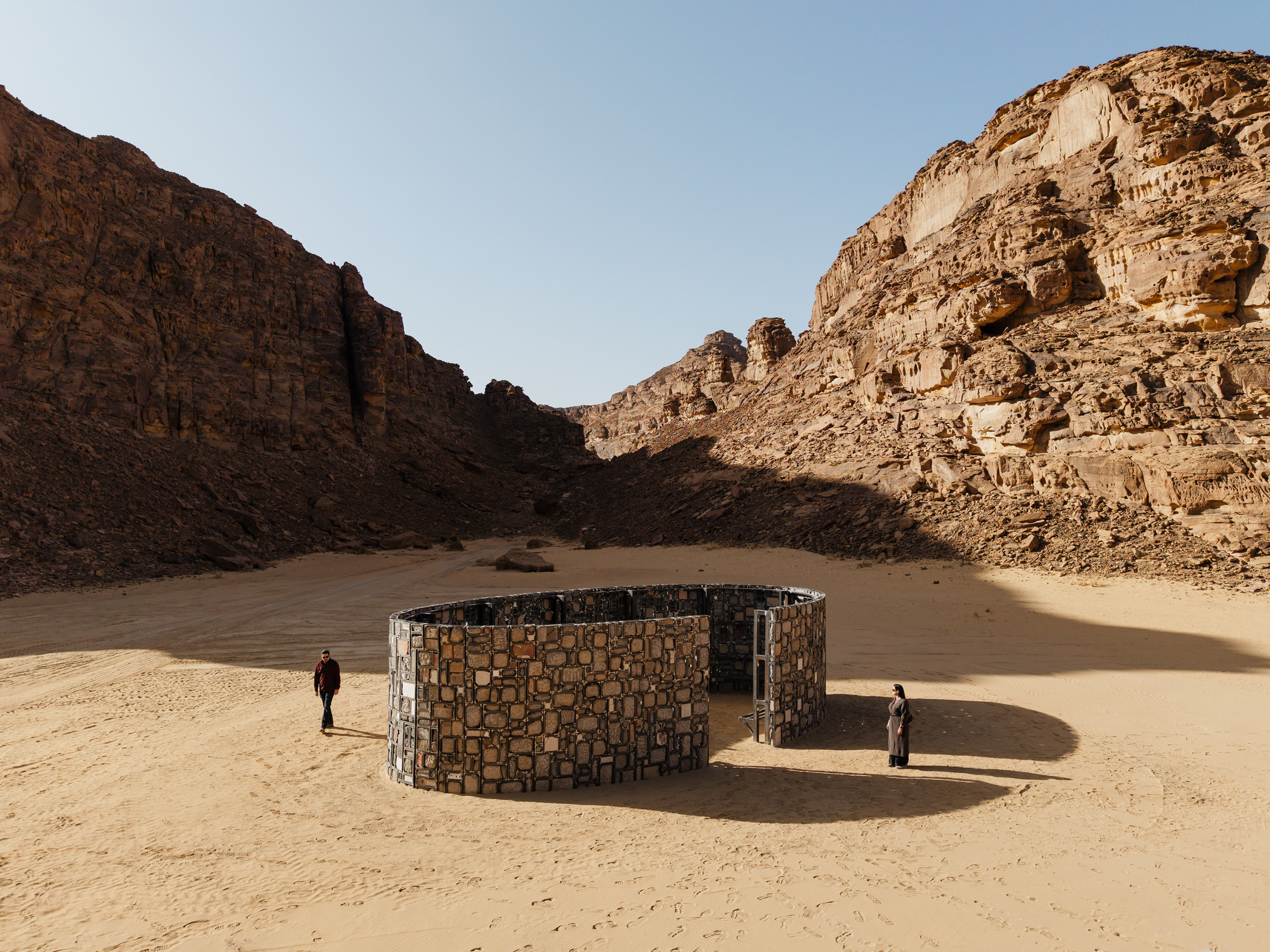
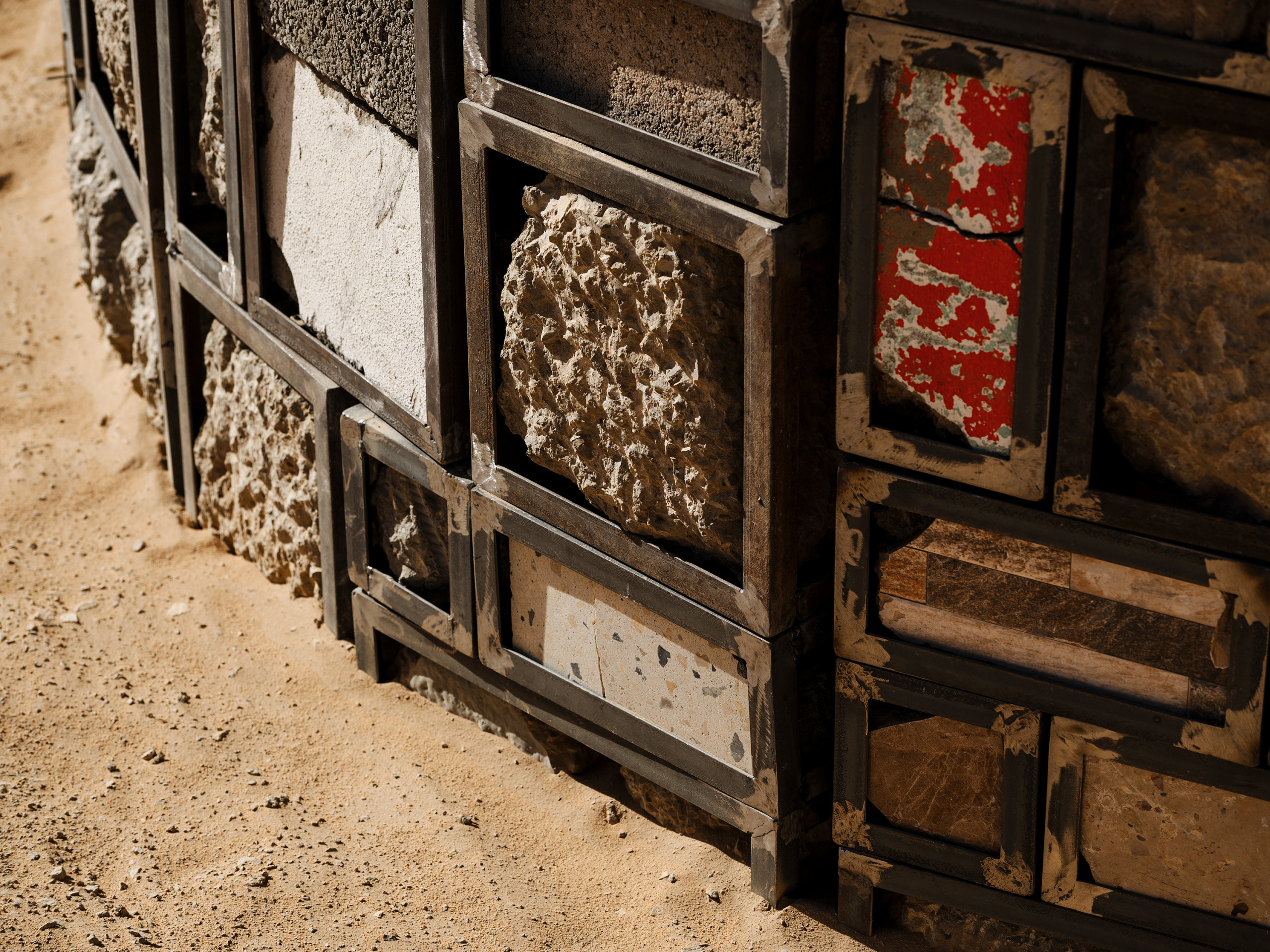
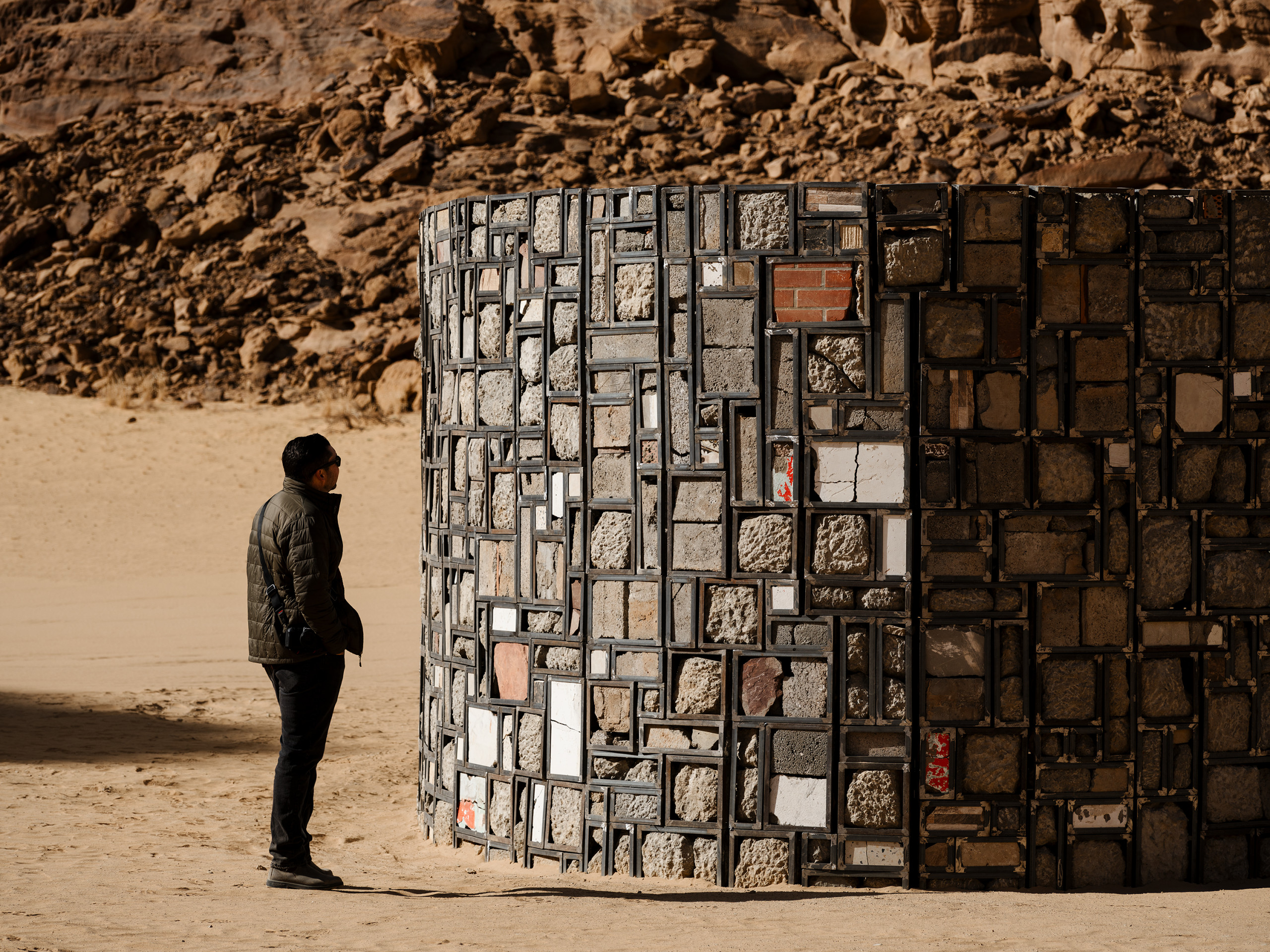
Future Fables emerges in continuation of my ongoing site-specific iterations that engage with new-age global phenomena and the repurposing of contemporary waste. The work extends a larger inquiry; how can the discarded matter of our time be transformed into monumental structures that compel us to think, remember and re-imagine? In this iteration, concrete debris becomes both material and metaphor: rubble of cities, ambitions turned residue, the bones of progress now stripped bare.
The desert holds memory the way stone holds time. In AlUla, wind shapes silence into story; ruins outlive the dreams that built them. I return these fragments, not to repair what is broken, but to listen. Concrete, so ubiquitous in the architecture of modernity, is also what we abandon, bury and forget. Here, it stands as witness to construction and collapse, climate anxieties, conflict and desire. Embedded in each fragment is a history of water, labor and aspiration.
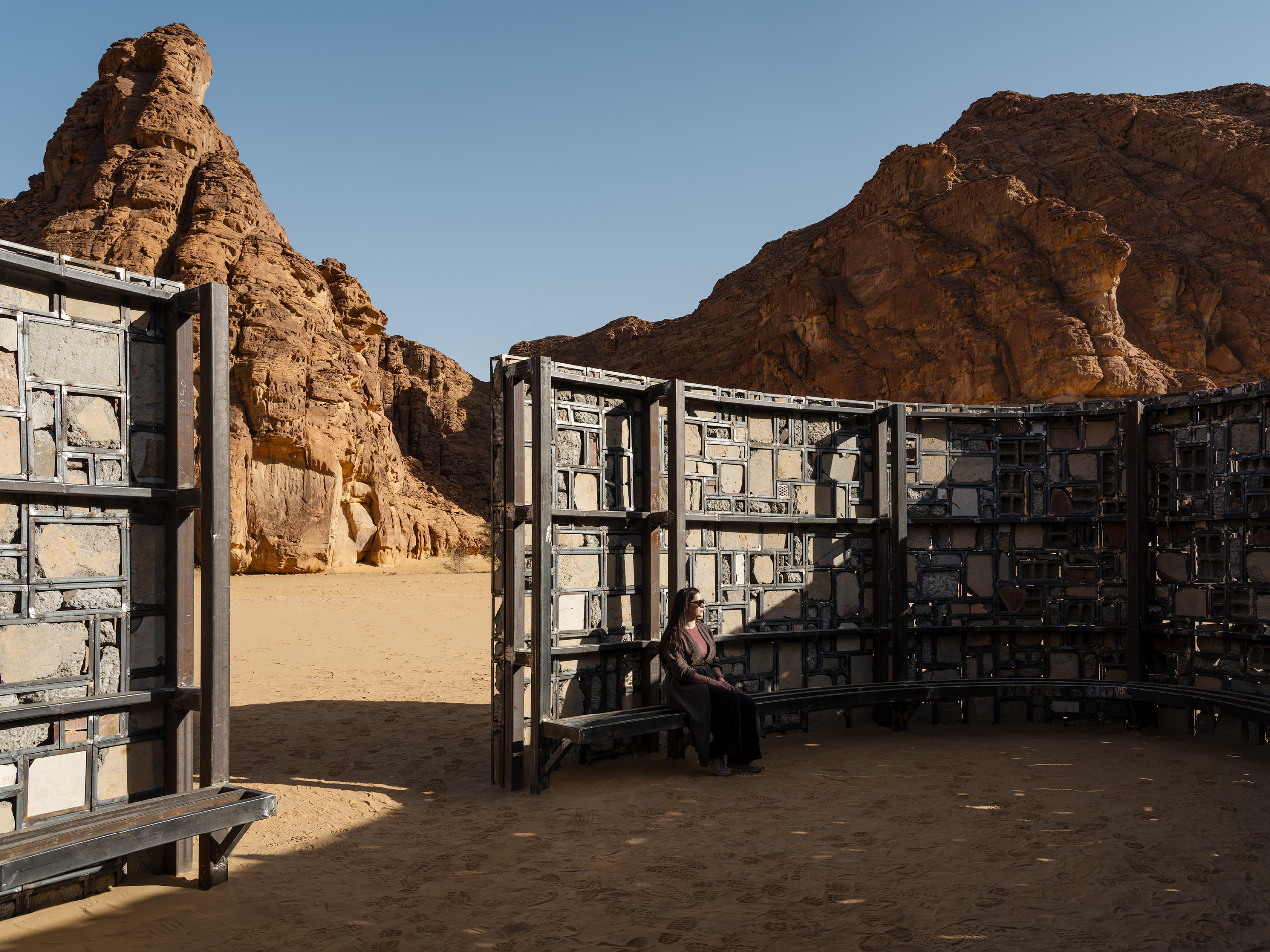
From a distance, Future Fables appears as a monumental elliptical, solid, almost fossil-like. Step closer and its fractures reveal themselves, rough edges, weathered surfaces, timelines exposed. The form invites slowing down. It asks viewers to walk around, linger, meditate on the past, present and the futures we choose to lead ourselves into. Have we not learned from our histories of conflict, extraction and ecological disregard? What transformations must begin within us if we are to make the world more habitable, more humane?
The sculpture grows through participation. Local debris carries the resonance of place; visitors are invited to leave words, grief, hope, turning the work into a living archive. In this desert of deep time, Future Fables becomes a fable of resilience, a relic of what remains, a space where ruins speak and tomorrow breathes through sand.
The desert remembers.
Wind writes in stone, time gathers quietly,
and what we abandon endures.
Future Fables grows from this horizon,
not to mourn the past,
but to imagine what may still emerge.
Concrete debris becomes my material:
the bone of cities,
ambition cast into permanence,
then left behind.
I collect these fragments and listen,
the hum of former industry,
the scent of distant rain,
footsteps once certain they could shape the world.
In AlUla, the desert receives them.
Deep time opens like a slow breath,
sand and ruin speak in one tongue,
fragile, resilient.
A monumental elliptic rise.
From afar: solid, steady.
Up close: fractured, tender,
like skin remembering a story.
This work is a fable made of rubble.
No instructions, only an invitation.
Step inside.
Leave a word, a hope, a trace of yourself.
Voices collect like wind in chambers of stone,
and the sculpture becomes a living archive, quiet, breathing, unfinished.
The desert is not empty. It listens.
It holds what we were
and what we might yet become.
Lean closer.
There is a future here,
soft as sand,
ready to shift beneath our feet.
About the Artist
Born 1978, Kaithal, India, Vibha Galhotra lives and works in Delhi. She is a conceptual artist whose multidisciplinary practice examines the entangled relationships between humans and the environment in an age shaped by climate change, globalization, and accelerating consumption.
Working across sculpture, installation, photography, video, public art, and large-scale site interventions, she probes the shifting socio-ecological realities of the Anthropocene. Her research-driven approach blends material experimentation with poetic reflection, drawing from ecology, economics, spirituality, and activism to consider urban expansion, environmental degradation, and collective responsibility. Galhotra often employs distinctive materials, particularly ghungroos (ankle bells), along with other found material such as rubbles, fabric, metal, and industrial remnants, to evoke ideas of fragility, resilience, and renewal. Through these materials she transforms everyday objects into immersive experiences that confront the consequences of unchecked development and ecological collapse while imagining possibilities for regeneration.
Her work has been exhibited internationally at institutions including the Asia Society, New York; Martin Gropius Bau,Berlin; Kiran Nadar Museum of Art, Delhi, and Kunstmuseum Wolfsburg. She has presented solo exhibitions with Jack Shainman Gallery, New York; Goodman Gallery, London; and Nature Morte, India. Galhotra is a recipient of the Rockefeller Foundation Bellagio Residency and the Asia Arts Future Award. Her works are held in major collections worldwide, including Nirox Sculpture Park, Seattle Art Museum, Singapore Art Museum, Essl Museum, Gates Foundation, and The Margulies Collection.