Tarek Atoui
The Water Song
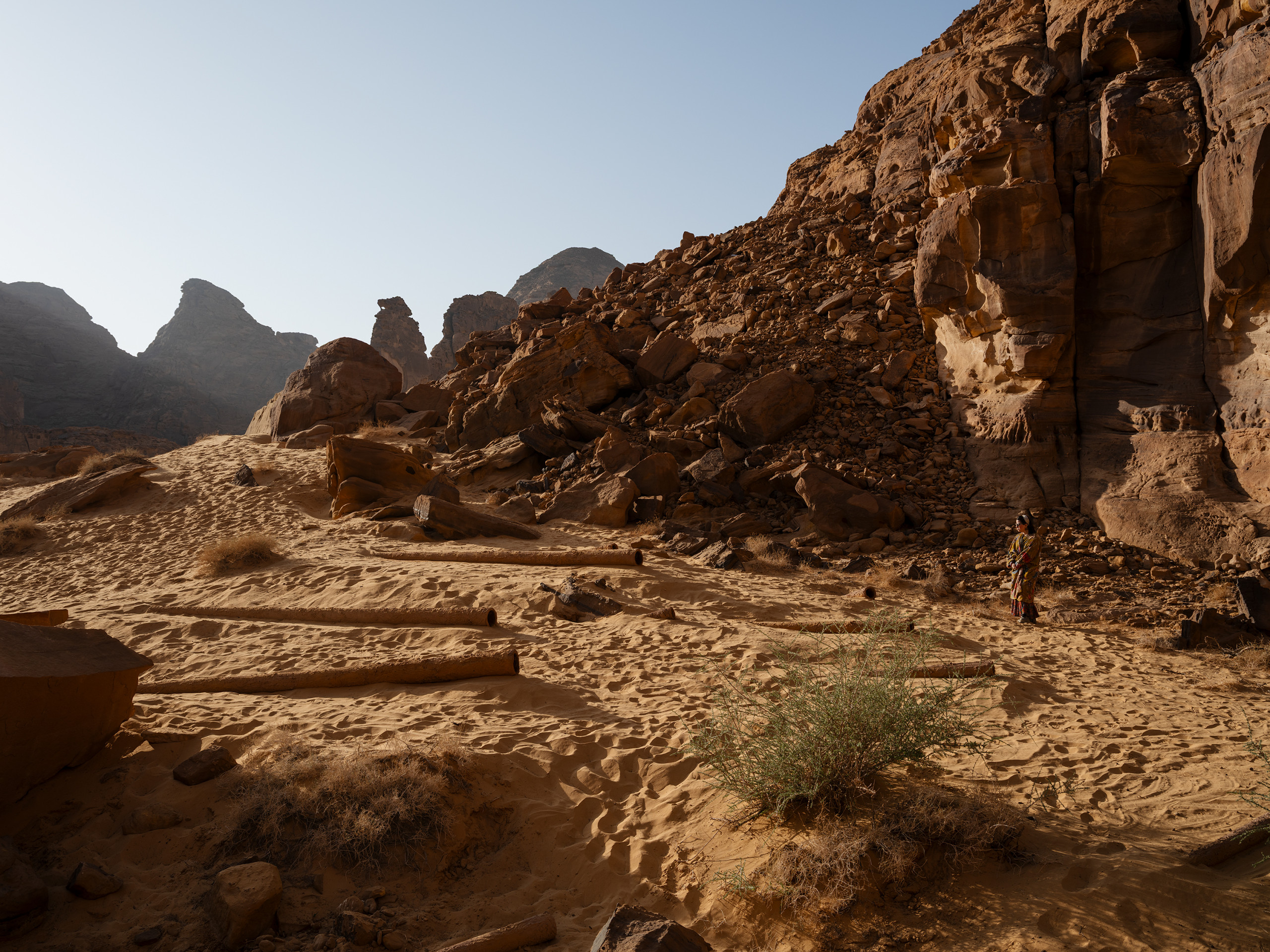
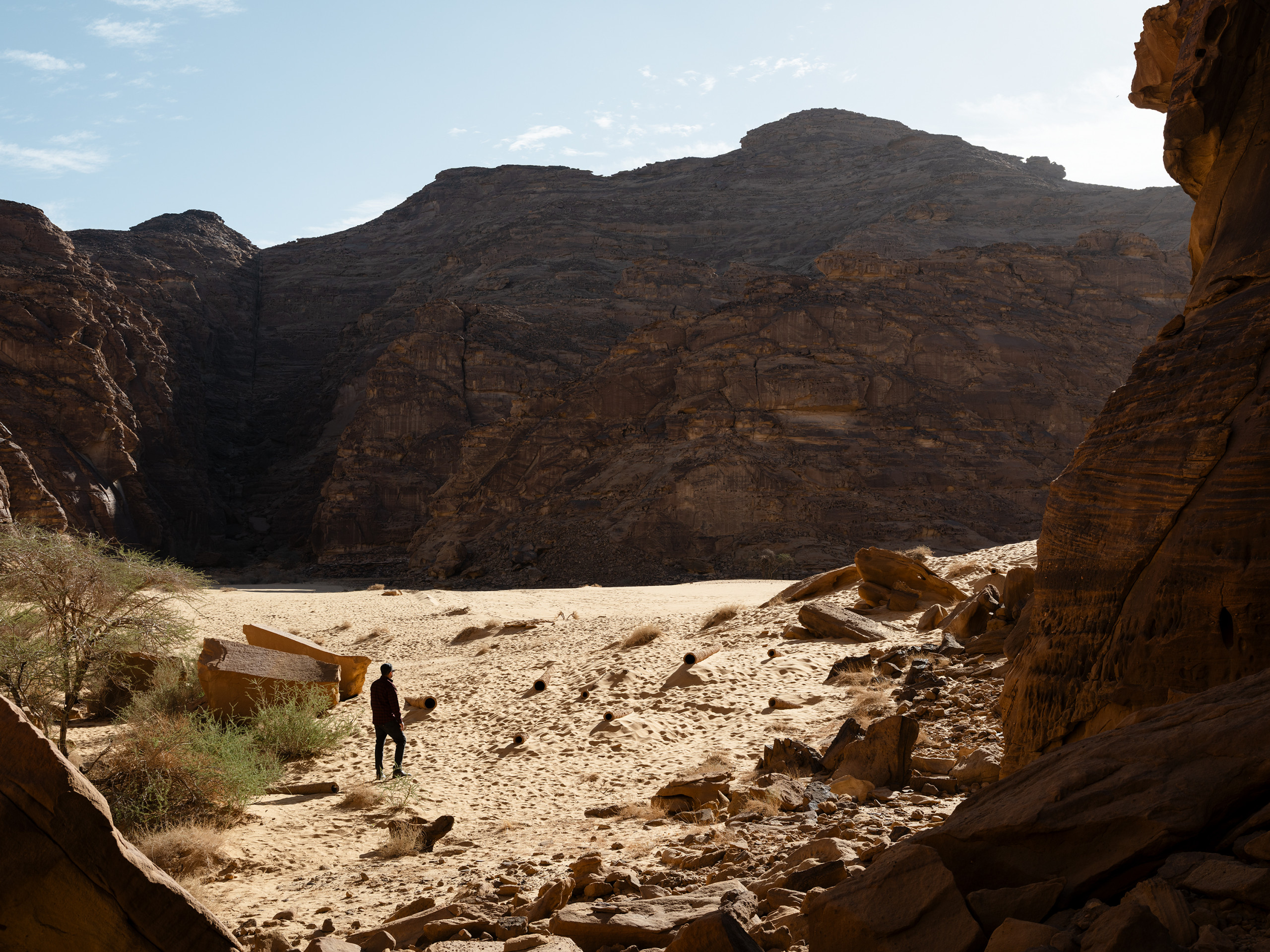
When I received the invitation to Desert X AlUla, I thought of the desert kites, vast geometric traces stretching across the arid plateaus of northern Saudi Arabia that I saw in 2024. Their purpose remains uncertain after thousands of years. In the fascination they still hold for me, I’ve often wondered about archaeo-acoustics and whether sound might be the missing key to their meaning: perhaps these ancient shapes were not only to be seen but also heard?
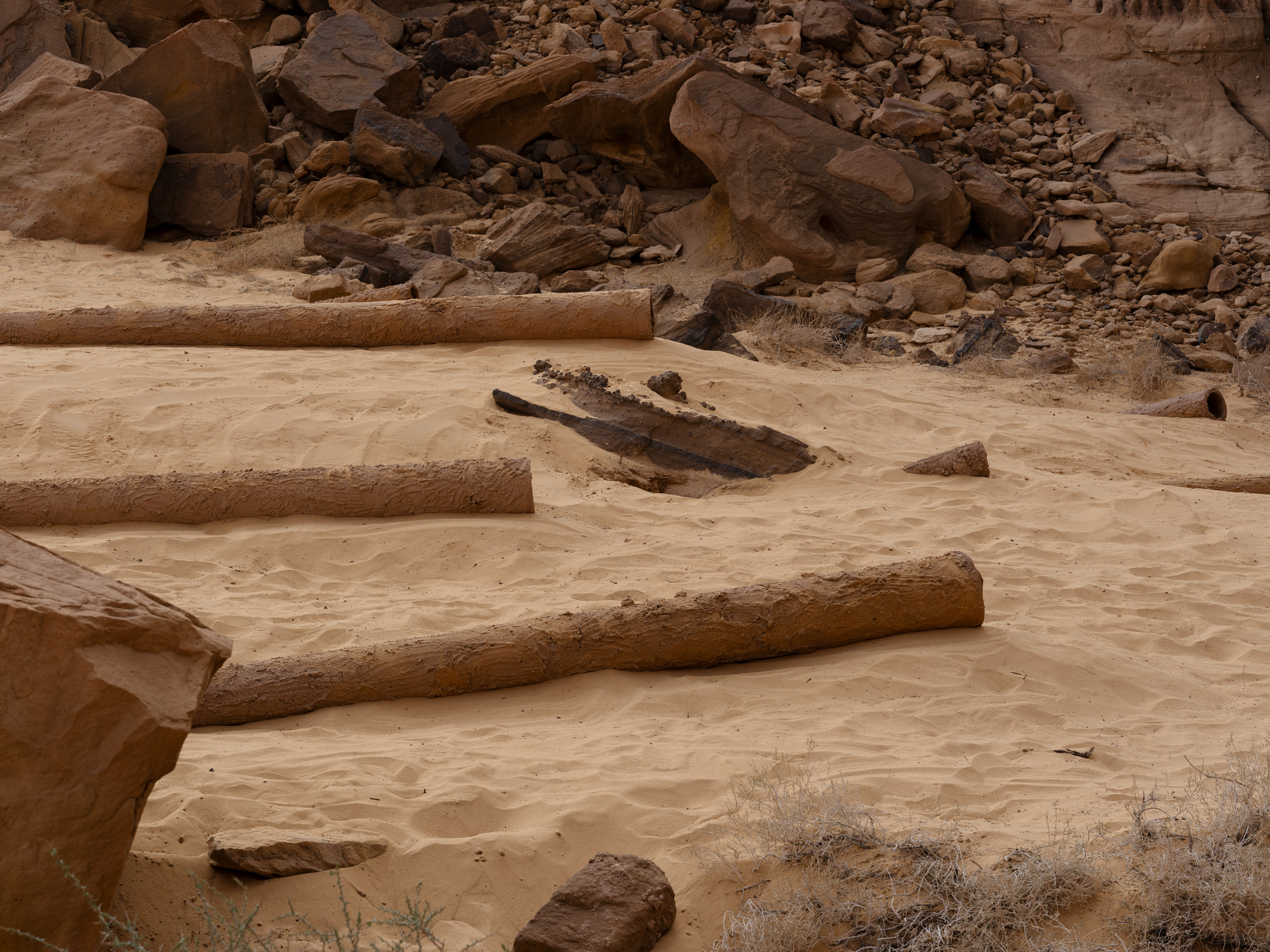
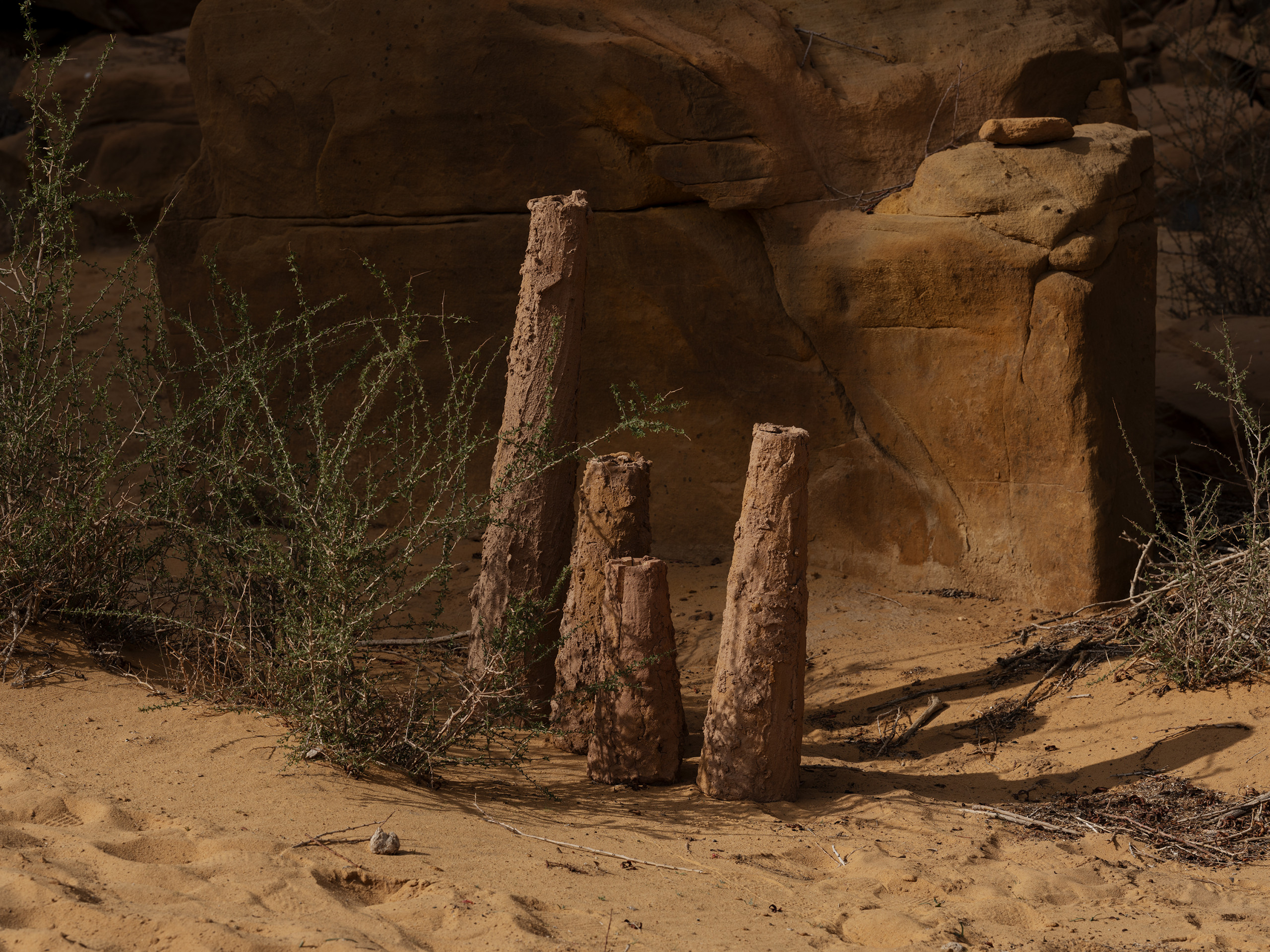
The site of Desert X AlUla ceased to be a mere expanse of sandstone, sun and sand. The air carried a peculiar echo, a resonance that felt almost deliberate. I began to imagine the landscape as an archaeological excavation, where the act of digging unraveled a mysterious discovery: a constellation of horn-like hollow structures, seven in all, each oriented with quiet precision and positioned with intent. Half-buried in the ground, softened by time, these horns seemed to emerge as if the earth were exhaling after a long silence.
Not far from this network of horns, the sound of water drops echoed from a stone cavity between the rocks - water slowly gathering through condensation in the desert air. Each time a drop formed and fell, air moved through the horns, bringing them to life to play a generative sequence of tones, a different chant with every drop. Each sound awakened the landscape, activating its surroundings. The horns conversed with the canyon walls in echoes and delayed harmonies. The air itself became part of the composition, and the sound felt like a call, a celebration - a song born from water itself, calling for more water.
This land art proposition relates to my long-term engagement with the contemporary art museum in AlUla, that continues to grow through collaboration with students, musicians, workers, and local craftspeople. Following the Bayt Al Hams exhibition - where education, mediation, and performance were central - I am developing a second chapter focused on locally-crafted horns and stones, unfolding through ongoing educational programs on horn-making and manipulation throughout the AlUla Arts Festival, extending the acoustic research and instrumental language shaped by The Water Song.
About the Artist
Born 1980, Beirut, Lebanon; Tarek Atoui lives and works in Paris. He is an artist and electro-acoustic composer who explores the medium of sound and the way it gives shape to perceptions through dynamic installations, experimental acoustic environments, and collaborative performances.
Atoui works with composers and craftspeople from different countries to invent complex instruments with strong sculptural haloes. By bringing together a wide range of materials and knowledge, Atoui tests both the acoustic properties and the unique ways in which elements like bronze, water, glass and stone transmit and reflect sound.
Using custom-built electronic instruments and computers, Atoui references current social and political realities, revealing music and new technologies as powerful aspects of expression and identity. Education and social connection are integral aspects of his practice. He often collaborates with local communities and invites visitors to interact with and experience his multi-sensory environments.
In 2025, Tarek Atoui presented Bayt Al Hams (The Whispering House) at the AlUla Arts Festival, an evolving sound-space developed through a long-term collaboration with the contemporary art museum in AlUla. He has exhibited at numerous major institutions, including Thyssen-Bornemisza Art Contemporary, Madrid (2025); Hangar Bicocca, Milan (2025); KUB, Bregenz (2024); S.M.A.K., Ghent (2024); Art Sonje Center, Seoul (2023); and Museum of Contemporary Art – MCA, Sydney (2023). Tarek Atoui’s works are part of several major collections, including the Guggenheim Museum, Tate, and Pinault Collection.