Mohammed AlSaleem
The Thorn, AlShuruf Unit, The Triangles, Flower Bud, and Al Ahilla
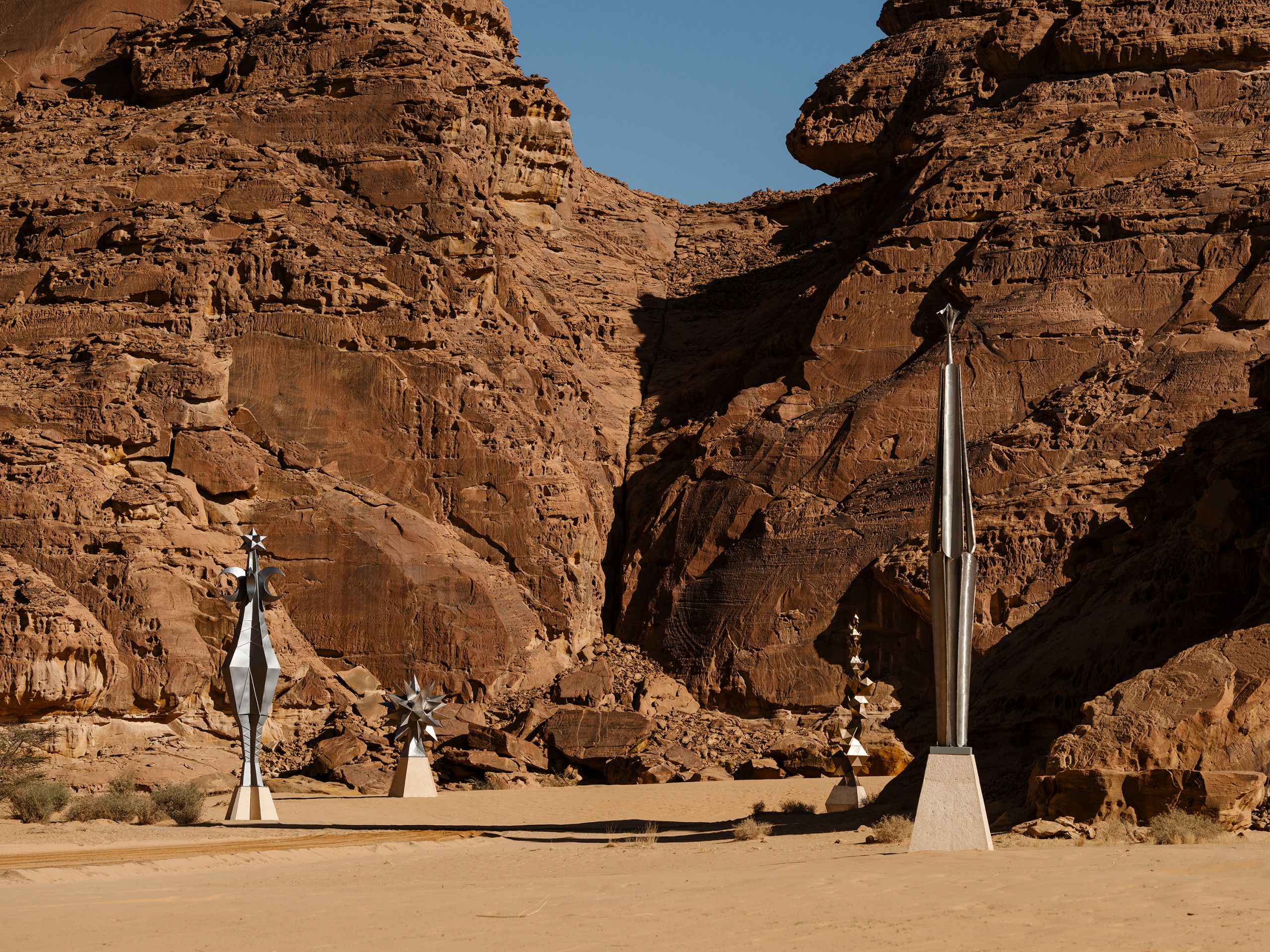
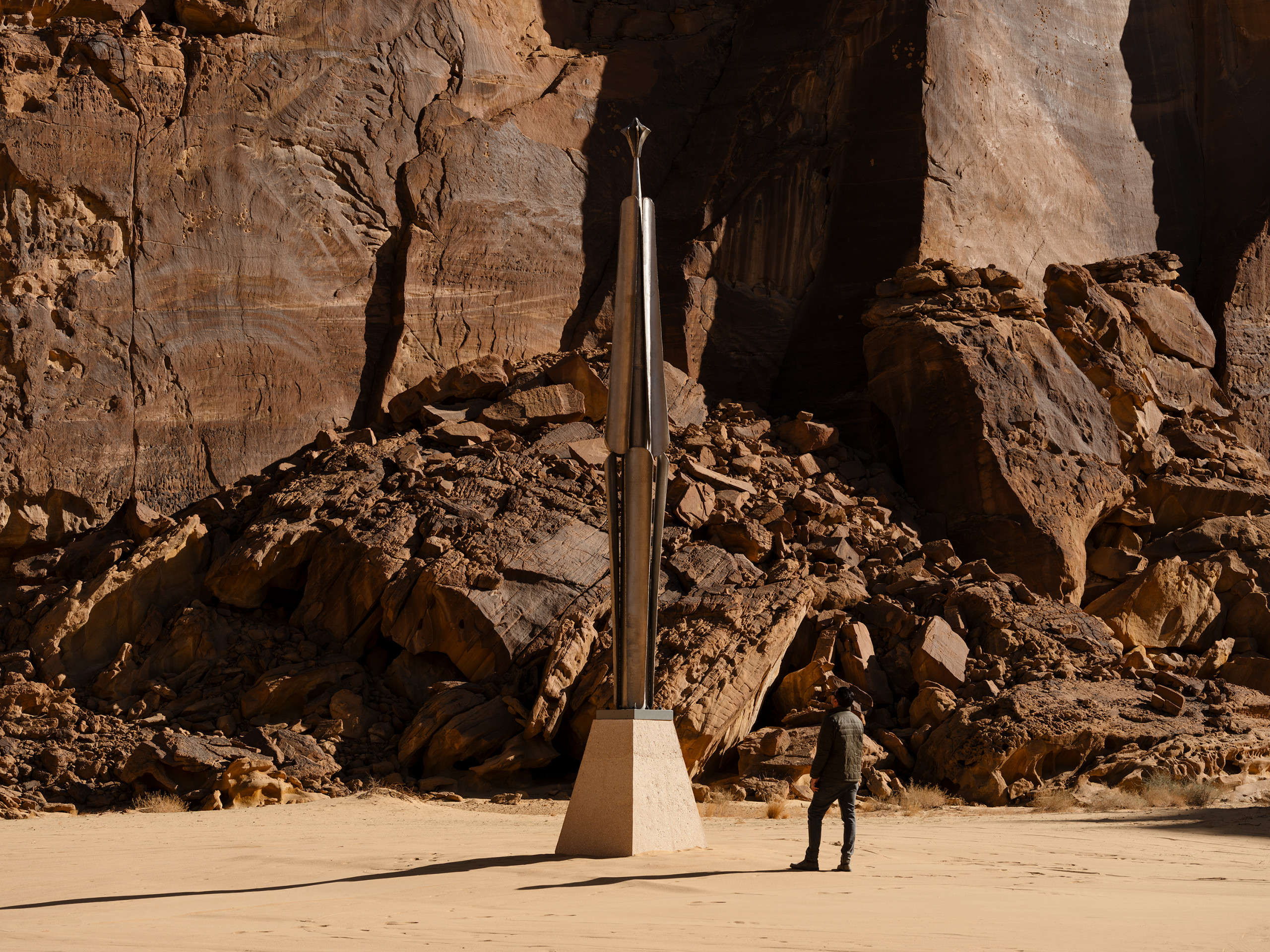
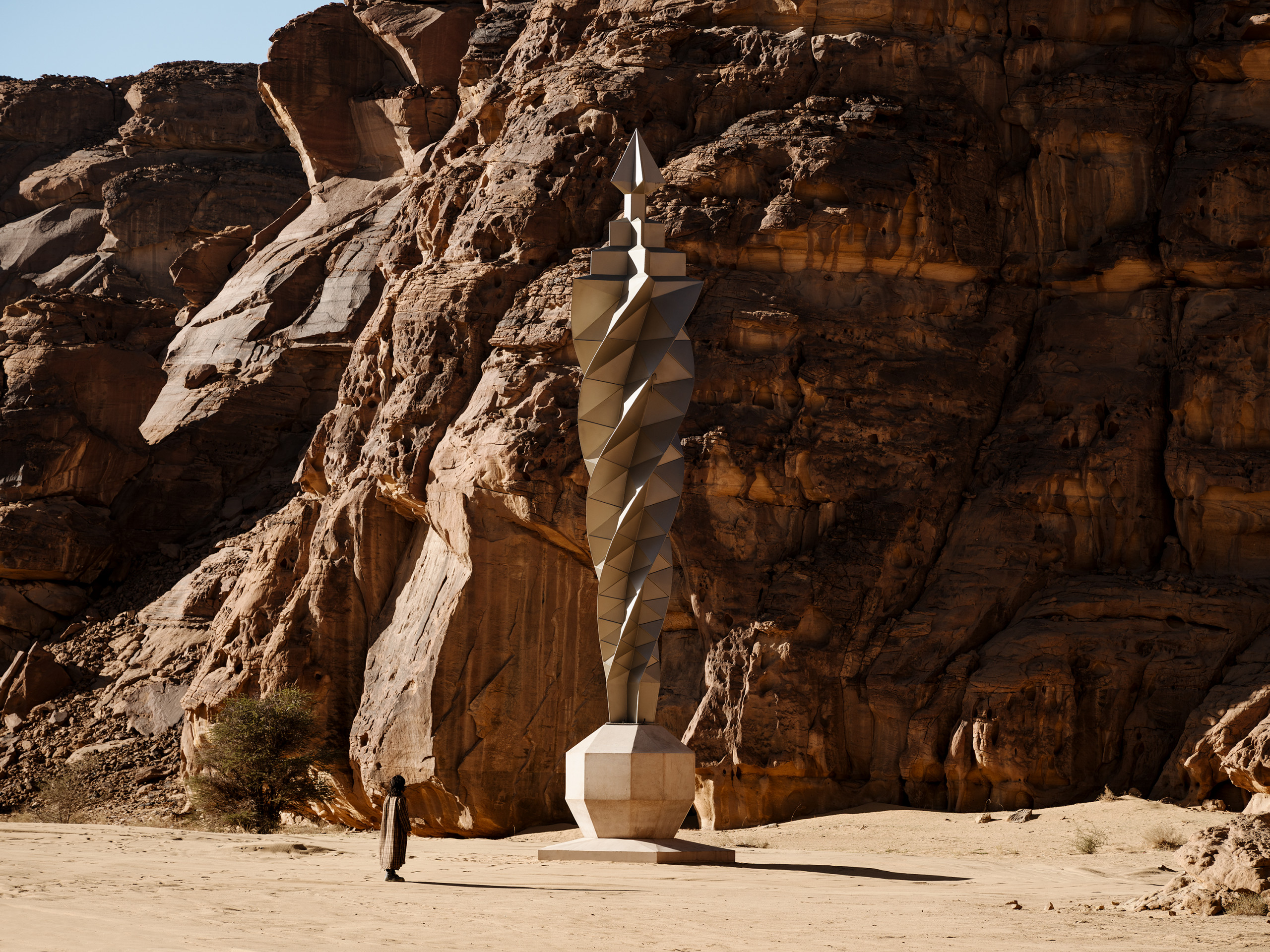
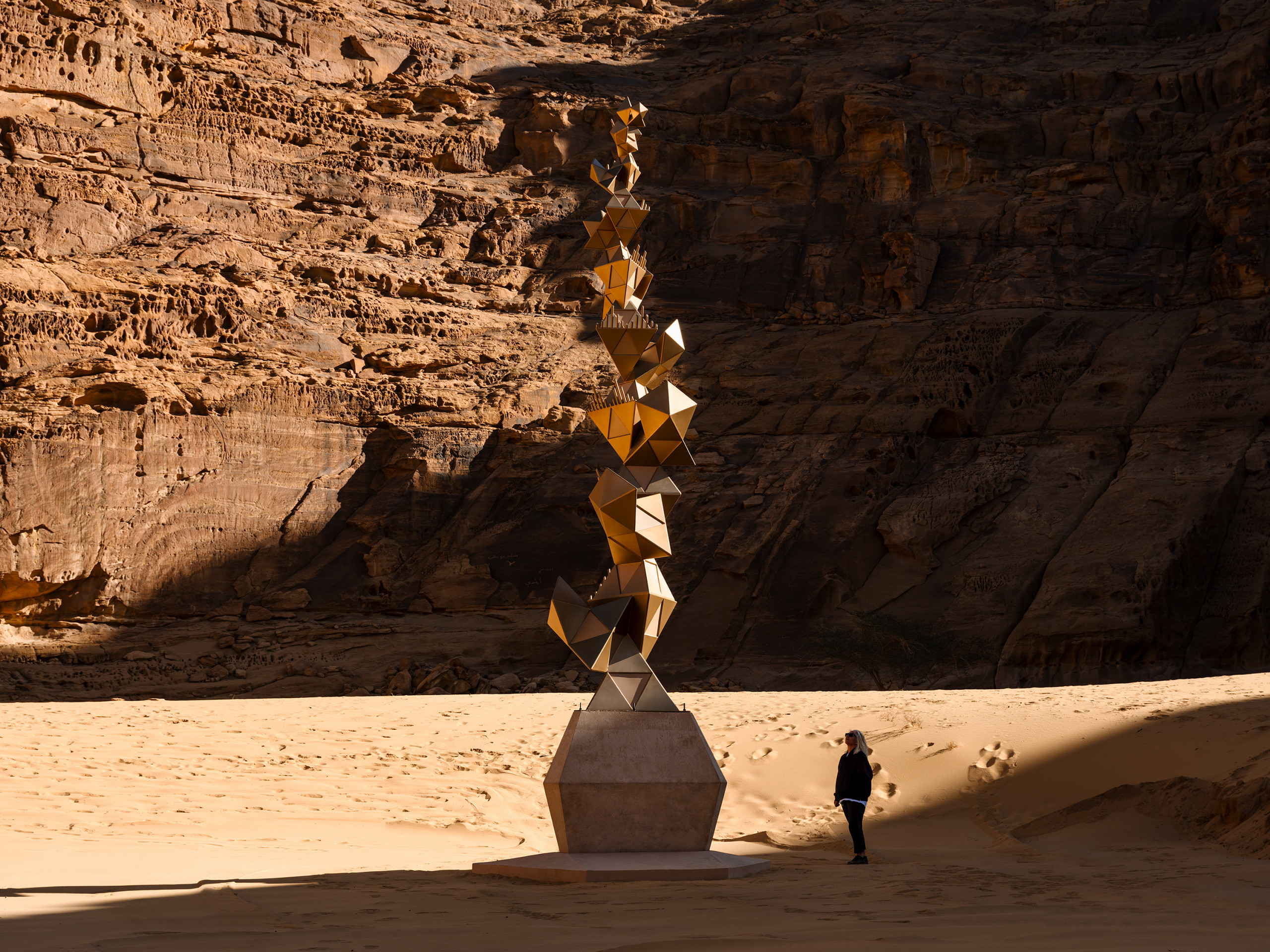
The Story of the Monumental Sculptures of Saudi Artist Mohammed AlSaleem.
The artistic ambition of Saudi artist Mohammed AlSaleem extended beyond the two-dimensional surface of the canvas toward an exploration of the third dimension. Sculpture and monumental form became a central component of his artistic practice from the 1960s onward. During his early years, AlSaleem produced a number of sculptures in wood and white plaster, taking the form of figures and abstract compositions that reflected his early engagement with mass, form, and spatial construction through a modernist, environmentally rooted visual language.
In the late 1980s, AlSaleem embarked on an ambitious project to enlarge seven sculptural works, conceived specifically for public squares in the city of Riyadh. The project was developed for submission to a public competition organized by the Riyadh Municipality as part of an initiative to beautify the city through monumental artworks. To realize this vision, the artist established a dedicated workshop, recruited skilled technicians, and secured the necessary materials to execute the sculptures entirely by hand. The production process extended over a period of no less than two years.
However, the project was ultimately not realized at the time, as the municipality redirected its urban beautification strategy toward landscaping and greenery rather than sculptural installations. As a result, the seven sculptures remained stored in AlSaleem’s workshop from 1990 until 2022.
In 2022, the seven sculptures were acquired by the Royal Commission for the City of Riyadh from the artist’s heirs. The works subsequently underwent comprehensive restoration and conservation using specialized companies, under the supervision of the artist’s daughter, Najla Mohammed AlSaleem. The restoration process was carried out with careful attention to preserving the original artistic imprint of Mohammed AlSaleem, while ensuring the highest possible technical and aesthetic standards.
The Sculptures
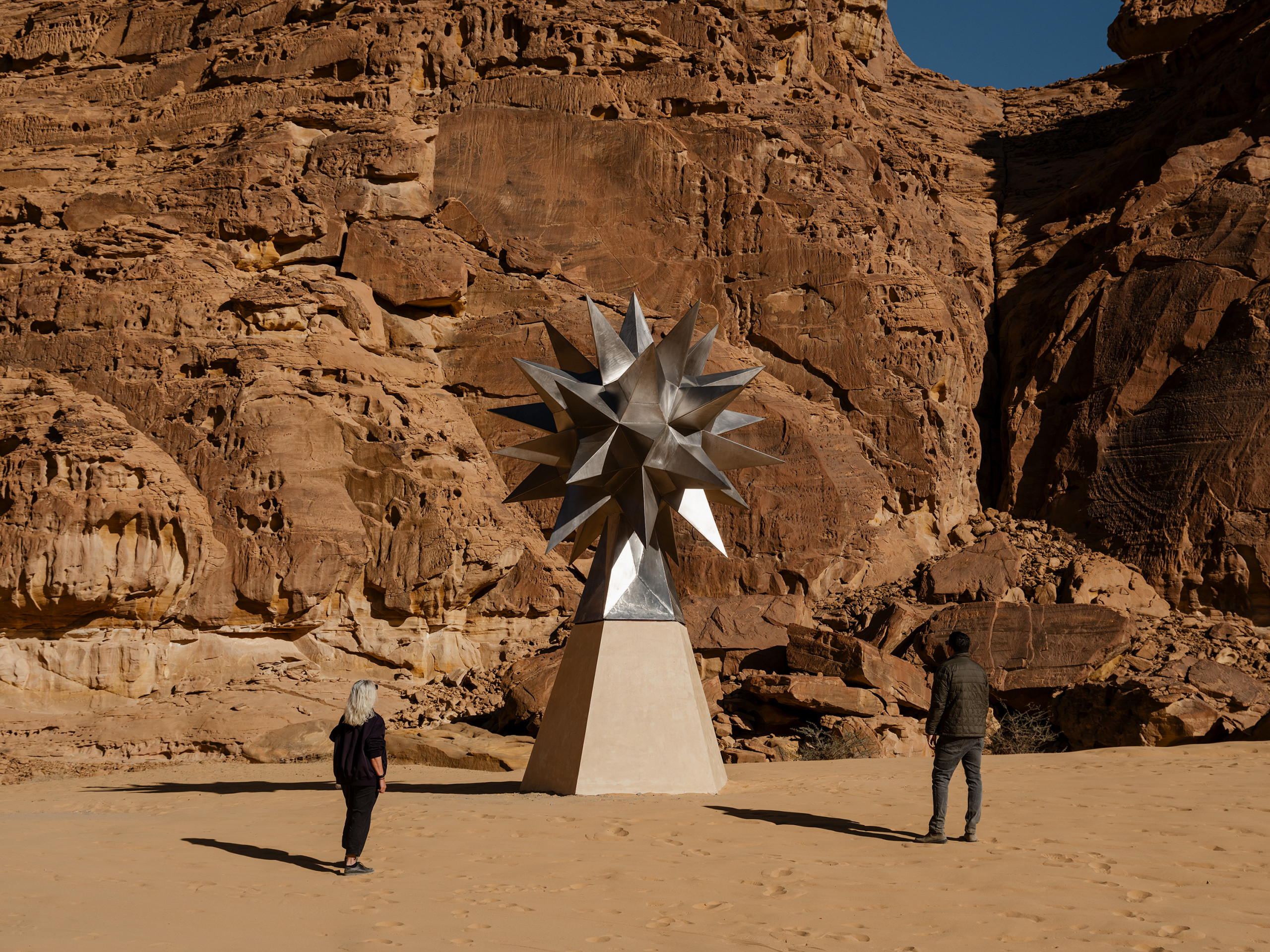
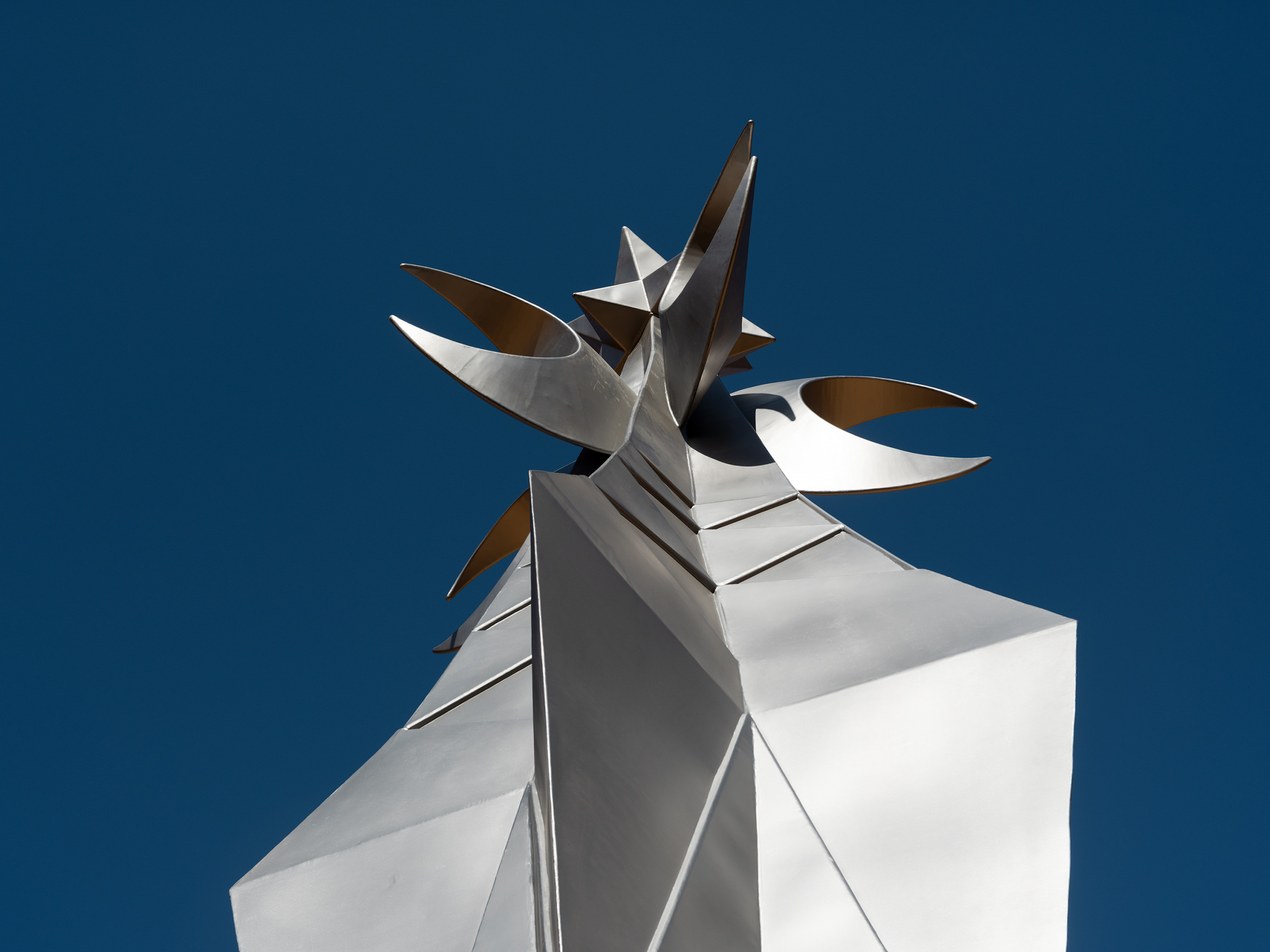
The sculptural ensemble in Desert X AlUla 2026 comprises five of the seven monumental works distinguished by their formal diversity and conceptual references. Among them is Al-Ahillah (The Crescents), based on the repetition of the crescent motif within a geometric structure, and Al-Shurfa (Al Shuruf), inspired by the architectural form of the traditional Najdi balcony and articulated through a spiraling composition. Al-Shawka Al-Khumasiyya (The Thorn) presents an abstract interpretation of a desert plant thorn, while Bar‘um Al-Zahra (Flower Bud) expresses themes of growth and emergence through a reduced, sculptural form. The project also includes Al-Muthallathat (The Triangles), constructed from layered geometric units drawn from Najdi decorative architecture.
About the Artist
Mohammed Mousa AlSaleem is regarded as one of the pioneering founders of the modern visual arts movement in the Kingdom of Saudi Arabia, and among the earliest figures to contribute to the formation of a contemporary Saudi visual identity, one rooted in the local environment while remaining in dialogue with global artistic practices. He was born in the town of Marat in the Najd region in 1939 and began his artistic career alongside his work in education, where he played a pivotal role in teaching art education and developing its curricula, firmly believing in art’s role in cultivating awareness and aesthetic sensibility.
AlSaleem’s artistic practice evolved through a long and sustained process of experimentation and engagement, both locally and internationally. In 1970, he was awarded a scholarship to Italy, where he studied at the Academy of Fine Arts in Florence and obtained a diploma in decoration. During this period, he was influenced by modern European art movements while maintaining a deep and enduring connection to the desert environment, which became the conceptual core of his artistic project. It was there that his distinctive style, known as “Desert Horizons,” fully crystallized, a visual philosophy based on horizontal extension, reduction, abstraction, and the evocation of natural elements, spatial openness, and the rhythmic visual language of the desert as both an intellectual and spiritual landscape.
Mohammed AlSaleem participated in dozens of solo and group exhibitions inside and outside the Kingdom, across Arab and international cities including Riyadh, Jeddah, Dammam, Cairo, Florence, Paris, and Washington. He received numerous international awards and certificates of recognition, particularly in painting and fine art photography. In addition to his artistic production, he maintained an active institutional presence, contributing to the establishment of the Saudi Art House (Dar Al-Fanoon), serving on juries and cultural committees, and acting as a visual arts consultant to several organizations.
AlSaleem’s body of work represents a comprehensive artistic experience that bridges authenticity and modernity, embodying a profound visual inquiry into identity, place, and the human condition—securing his position as a foundational figure in the history of contemporary Saudi art. His distinguished artistic journey concluded with his passing in Prato, Italy, in 1997, after a decades-long career that helped establish the foundations of modern Saudi visual art and left behind a lasting artistic and cultural legacy.