Ibrahim El-Salahi
Haraza Tree
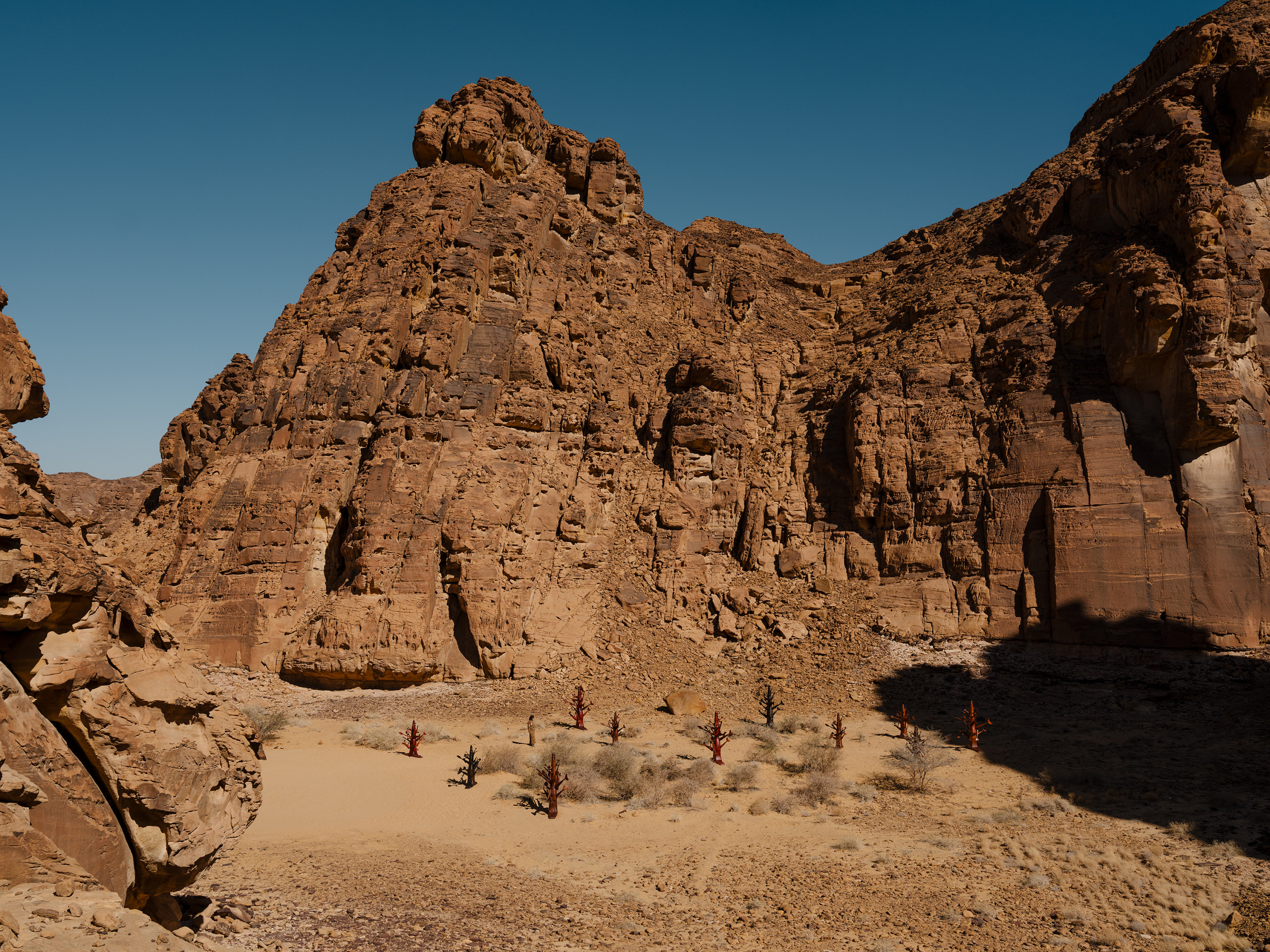
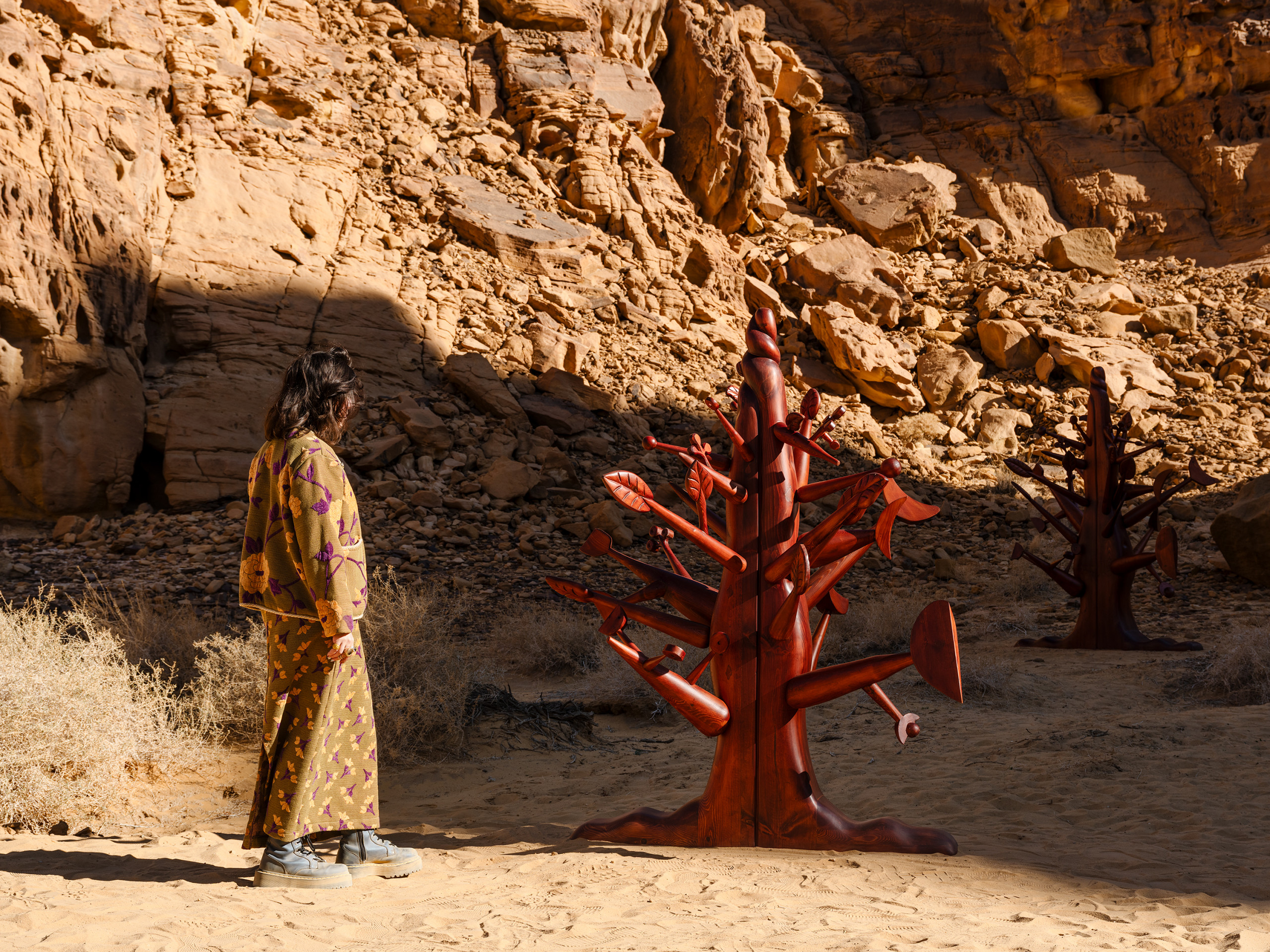
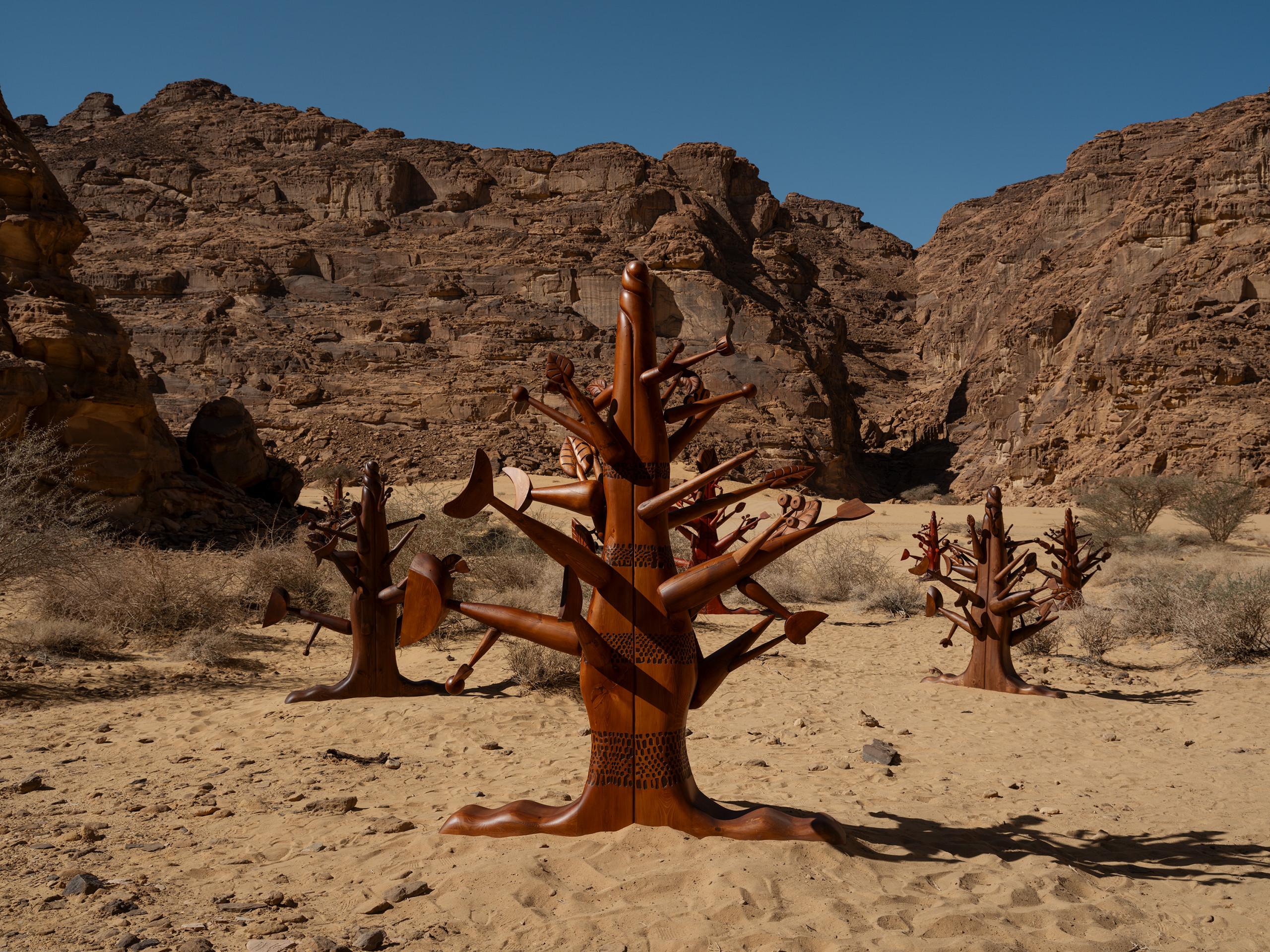
My style changes, but I keep working on one particular theme inspired by a tree, an Acacia locally called the Haraza that grows on the banks of the Nile. During the rainy season the tree is leafless, and it blossoms with freshly budding green leaves when the weather turns dry and the river flows at its lowest towards the sea. Through all, the tree remains steadfast, silently watching over the passage of seasons and time.
I started my ongoing ‘Tree series’ around the turn of the millennium, with the first sculpture being realized in 2018 based on my pen and ink drawing, Meditation Tree. It has long been my ambition to realize a forest of these ‘Tree’ sculptures in which the individual and the collective exist in harmony, the repetition in three-dimensional form embodying my vision of a forest where unity emerges from multiplicity, in which the individual and the collective exist in harmony. One tree is represented many times in the same form to represent the many aspects of the great human society. The only differences are in colours and cultures, but we are basically all the same. Of the same origin with the many representing the one. I see the series is an ongoing investigation of the tree/body metaphor, a link between heaven and earth, creator and created.
About the Artist
Born 1930, Omdurman, Sudan, Ibrahim El- Salahi lives and works in Oxford, England. He has played a foundational role in defining Sudanese modernism, and has influenced the trajectories of modernist practices across the continents of Africa and Europe. He studied art first in Khartoum, Sudan then at the Slade School of Art in London, UK. Upon his return to Sudan in 1957, he established a new visual vocabulary which arose from combining transnational modernist formalism with surrealistic figuration. The artist uniquely merged Islamic textuality and motifs recognizable across East and West Africa, coinciding with periods of decolonisation and social change across the region. Celebrated for his paintings and drawings, he has recently turned to sculpture in the form of the singular ‘meditation tree’. The grove commissioned by Desert X AlUla 2026 is inspired by Acacia trees from the banks of the Nile, but also relates to aAcacia trees growing throughout AlUla’s desert canyons– resilient plants that provide shade, animal nourishment and firewood.
In 2013, Ibrahim El-Salahi became the first African artist to have a comprehensive retrospective at Tate Modern, London. His work is included in the permanent collections of the Museum of Modern Art, New York; The Metropolitan Museum of Art, New York; The Art Institute of Chicago; The National Museum of African Art, Smithsonian Institution, Washington, DC; The British Museum, London; Tate Modern, London; Iwalewahaus, Bayreuth; The Ashmolean Museum, Oxford; Newark Museum, Newark; Baltimore Museum of Art, Baltimore; Mathaf, Qatar; Sharjah Art Foundation; The Guggenheim Abu Dhabi, UAE; The National Gallery, Berlin and many others.