Héctor Zamora
Tar HyPar
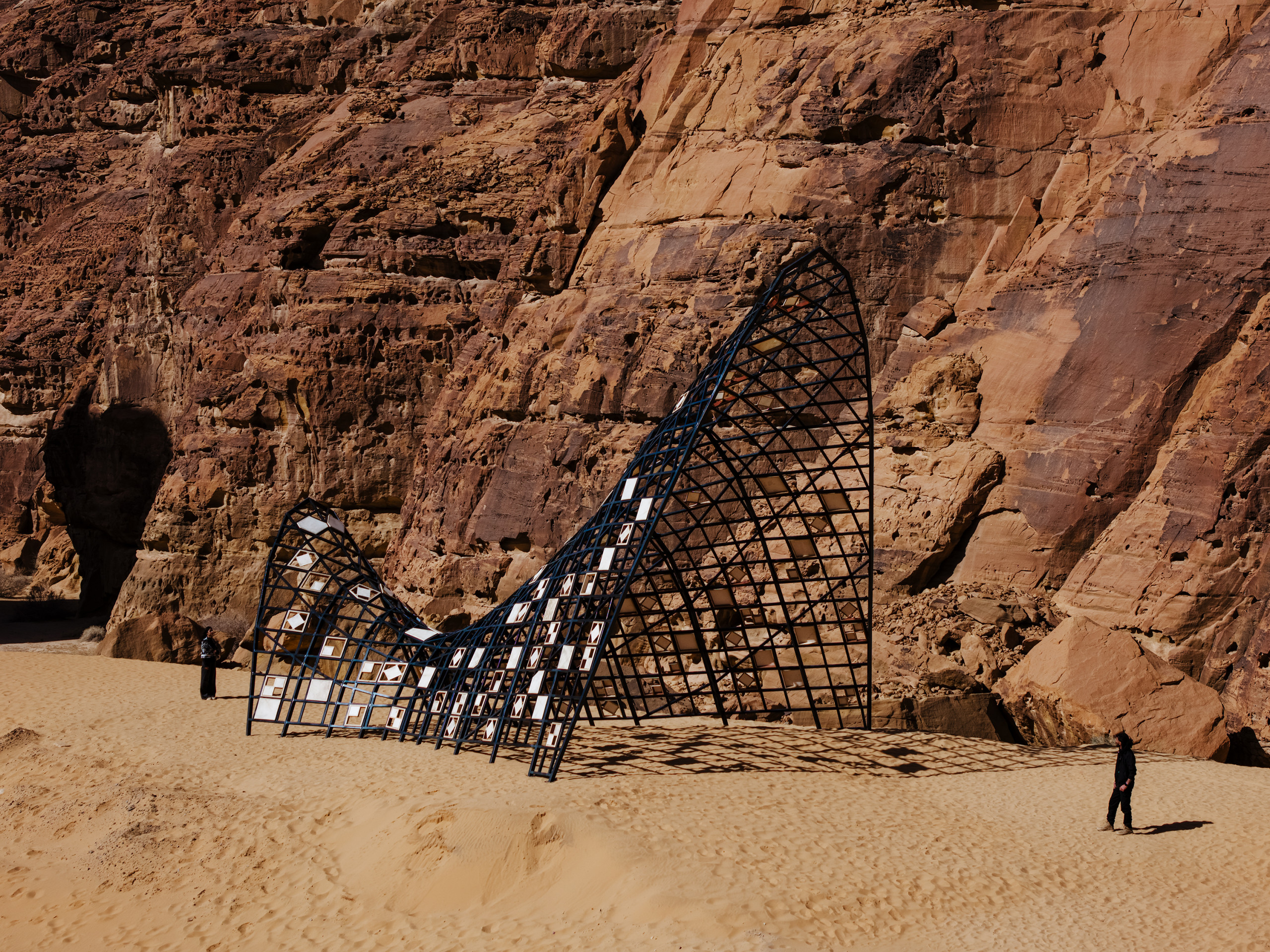
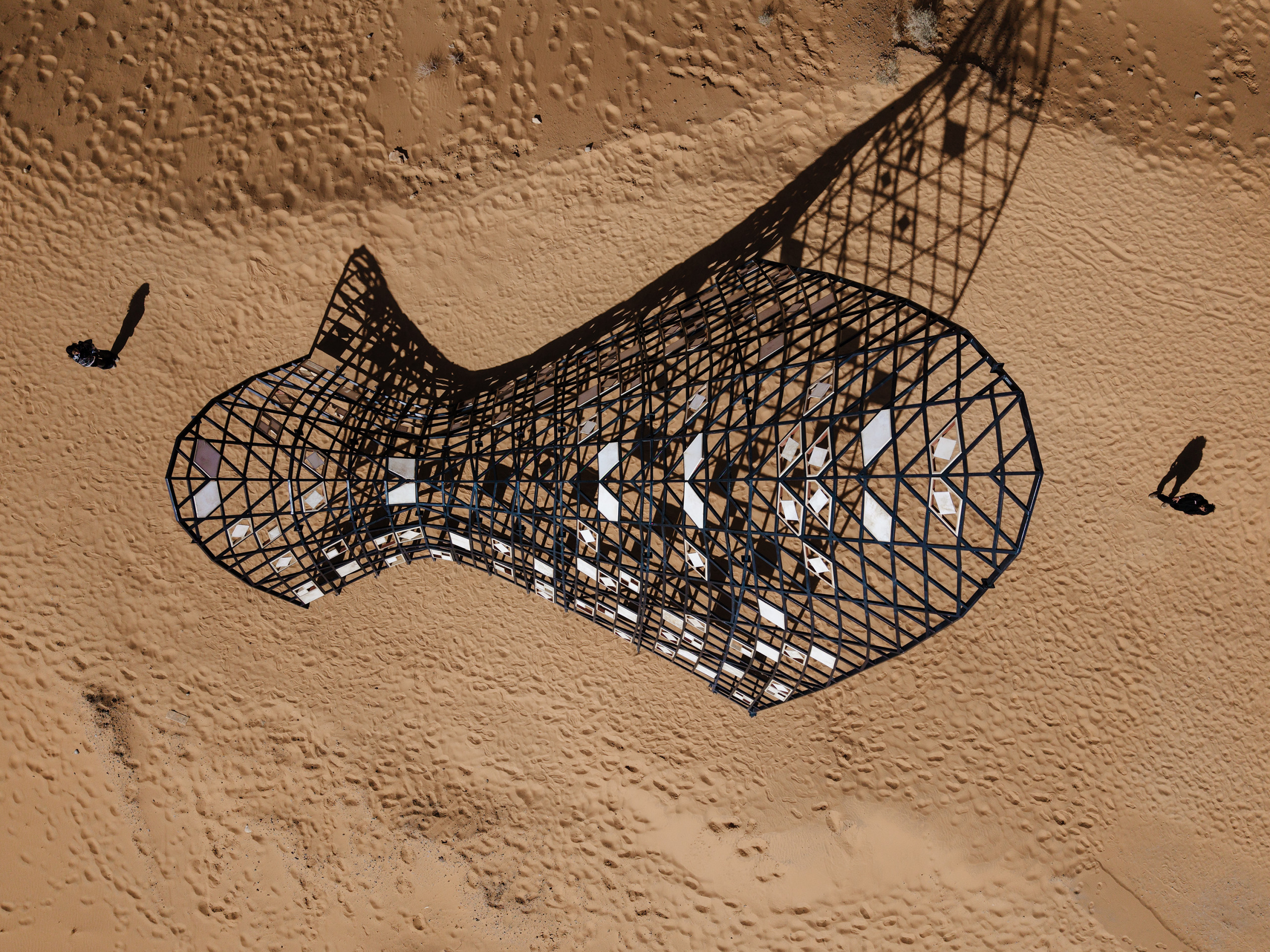
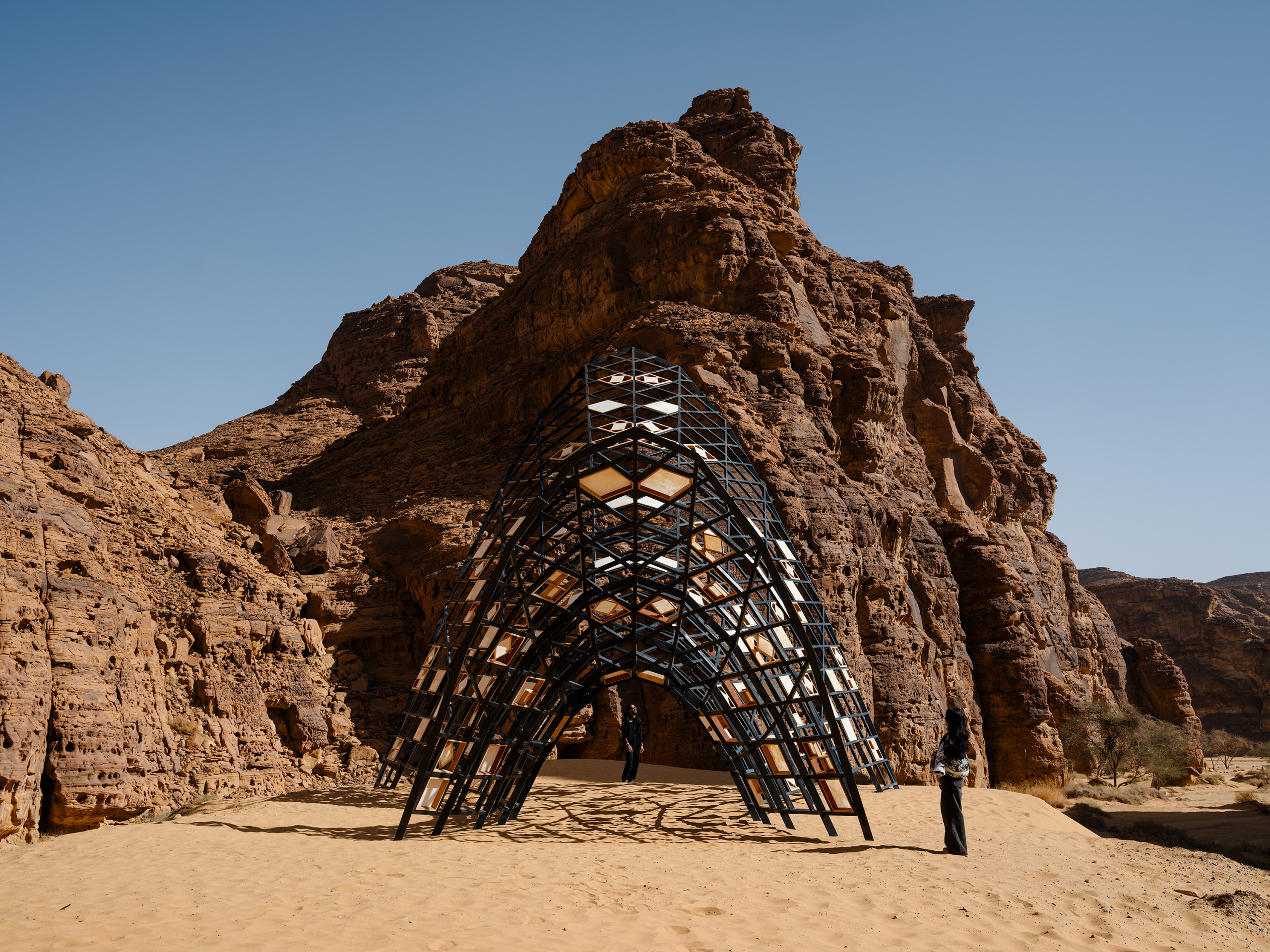
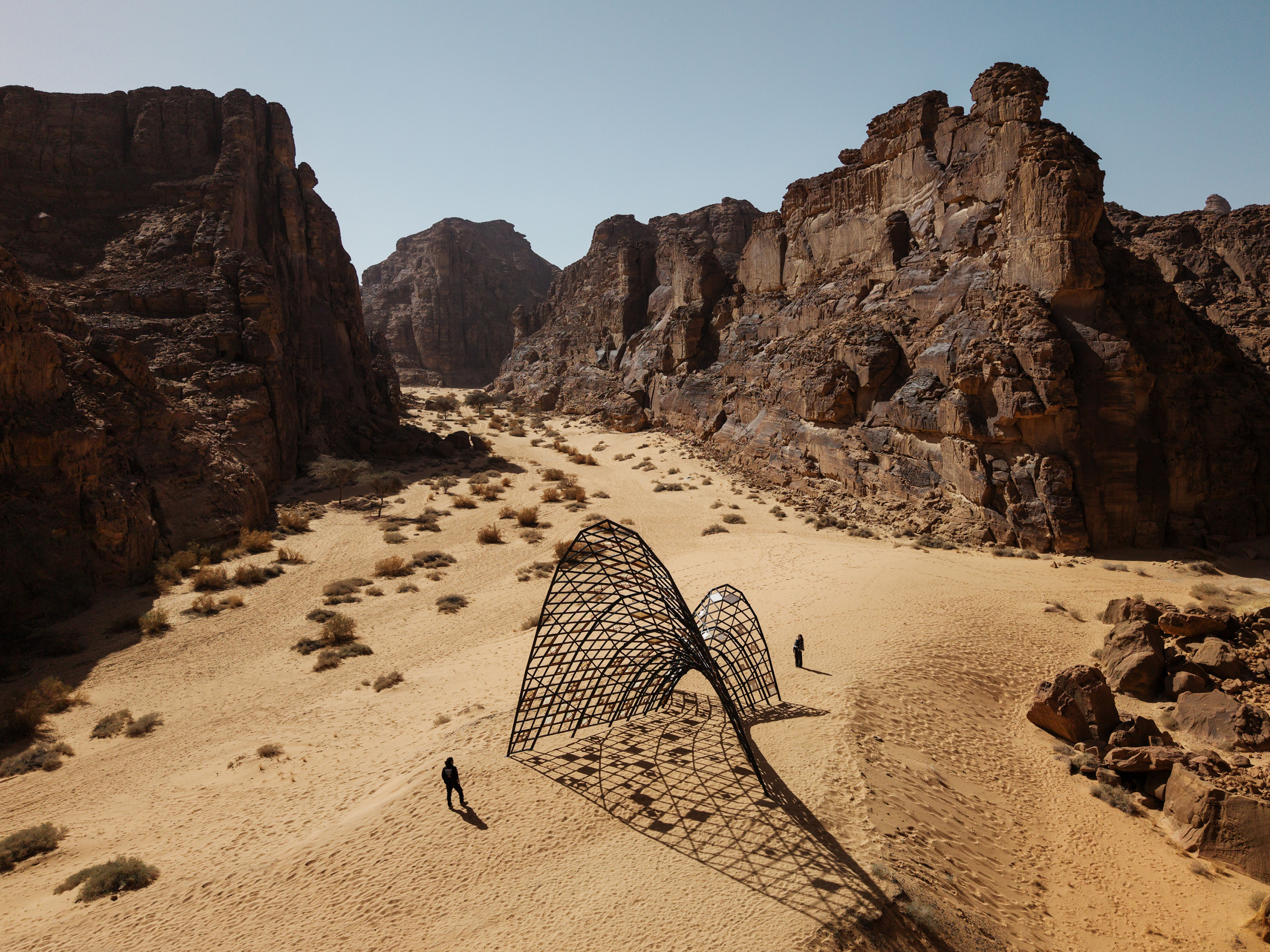
In December of ’22, I visited AlUla as part of the research for a proposal for a major work for AlUla. Being in this part of the world for the first time shocked me in a positive way, which I was not prepared for. It was a new reality in terms of nature and culture. My only request in that initial contact with the desert was solitude. By myself, walking for six hours, I had a unique experience following a sound carrying through one of the valleys. The noise grew stronger, stronger, stronger until I found a small cave at the top of a hill, full of a cloud of bats. What started as a strong attraction to their curious sounds encapsulated all the effects of this place’s natural architecture made of stone and mountains, echoes and reverberations. During my second visit for AlUla Future Culture Summit in 2024, my research into acoustic phenomena of the desert deepened with a three-day solo camping expedition. From there came my desire to activate the valley as a sound instrument, as site-specific land art. Stones have been sculpted by the wind over hundreds of thousands of years. Each formation means unique behaviors in what can be heard: the desert valley is surrounded by the extraordinary acoustic properties of ancient geology. The architecture functions as a sound-amplifying device (the installation Tar HyPar becomes both the setting for an analogical sound piece and the instrument itself), projecting toward the mountain walls and establishing an emotional dialogue where we are immersed in what is heard, magnifying the grandeur of the landscape and fostering a reciprocal contemplative relationship between the environment and all who inhabit it.
The timeline and the curatorial dialogue really pushed me and where we ended up is a completely different place from where the project started. A sonic sanctuary now takes the form of hyperbolic paraboloid, the HyPar of the title– whose geometric surfaces follow a mathematical order of forces. The result is entirely a conversation with the local cultural context, where nature is in control, where traditional drums called ‘Tar’ are foundational to the culture. To recognize an element of local life through drumming means giving local people the right to use the structure as their instrument. The drums are a way to connect with nature, with tales, with spirits that are in the desert. Through sound, across mountains, by way of reverberance, we each create energy with our hands, the skin of an animal as elemental conduit. The paradox is the sonic environment amplifies our perception of silence, a humbling reminder of our place in the universe and of the boundless, timeless powers beyond our control and unveiling nature’s own symphony.
About the Artist
Born 1974, Mexico City, Mexico, Héctor Zamora creates environments and situations that have involved accumulations of typewriters, word balloons, flags, terracotta pots, bananas and ice-cream. These everyday objects and foodstuffs become symbols and tools in group performances that depend on cooperation and repetition, generating new rituals.
Zamora questions the everyday uses of materials and the possible functions of space. The artist provokes unexpected and surprising situations through a meticulous emphasis on conceptualization and the resulting construction. His work involves the active participation of the viewer, inviting reflection through interaction with each of his interventions.
As well as choreographing time-based actions, Zamora builds structurally robust yet methodologically porous constructions, made of materials through which light and air can pass. They stand both as abstract geometric structures and as bridges between wild and cultivated environments, straddling public and private space. His work transcends the conventions of exhibiting to generate friction between the common roles of exterior and interior, organic and geometric, real and imaginary, viewer and participant. Each work invites us to reconceive borders to consider their ultimate permeability.
Zamora has exhibited in numerous biennales including Havanna, Busan, Sao Paulo (2006); Liverpool and Cairo (2010), Venice (2009 and 2011), Istanbul (2013), Lyon (2017), Bruges (2021), Mercosul, Porto Allegre (2022), Lisbon and Desert X in California (2023) and Bogota (2025); as well as group shows in museums and art institutions across Europe, North and South America. Recent solo projects include the 20-2015 touring exhibition Order and Progress at Palais de Tokyo, Paris, MAAT, Lisbon, Museu Maritimo de Ilhavo and Viborg Kunsthall; The Roof Garden commission at The Met, New York (2019); and Emergencia at Albarran Bourdais, Madrid (2024).