Agnes Denes
The Living Pyramid
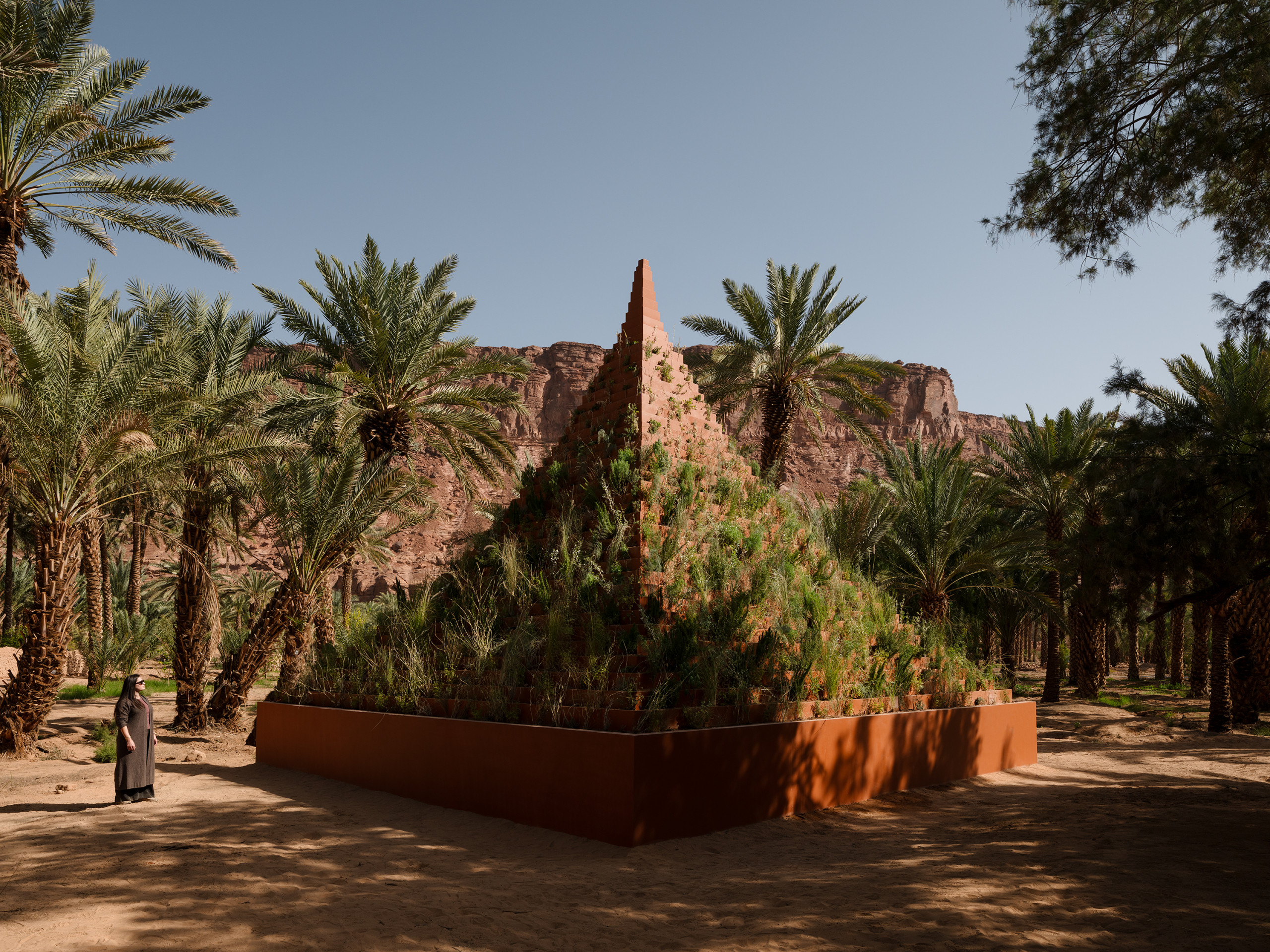
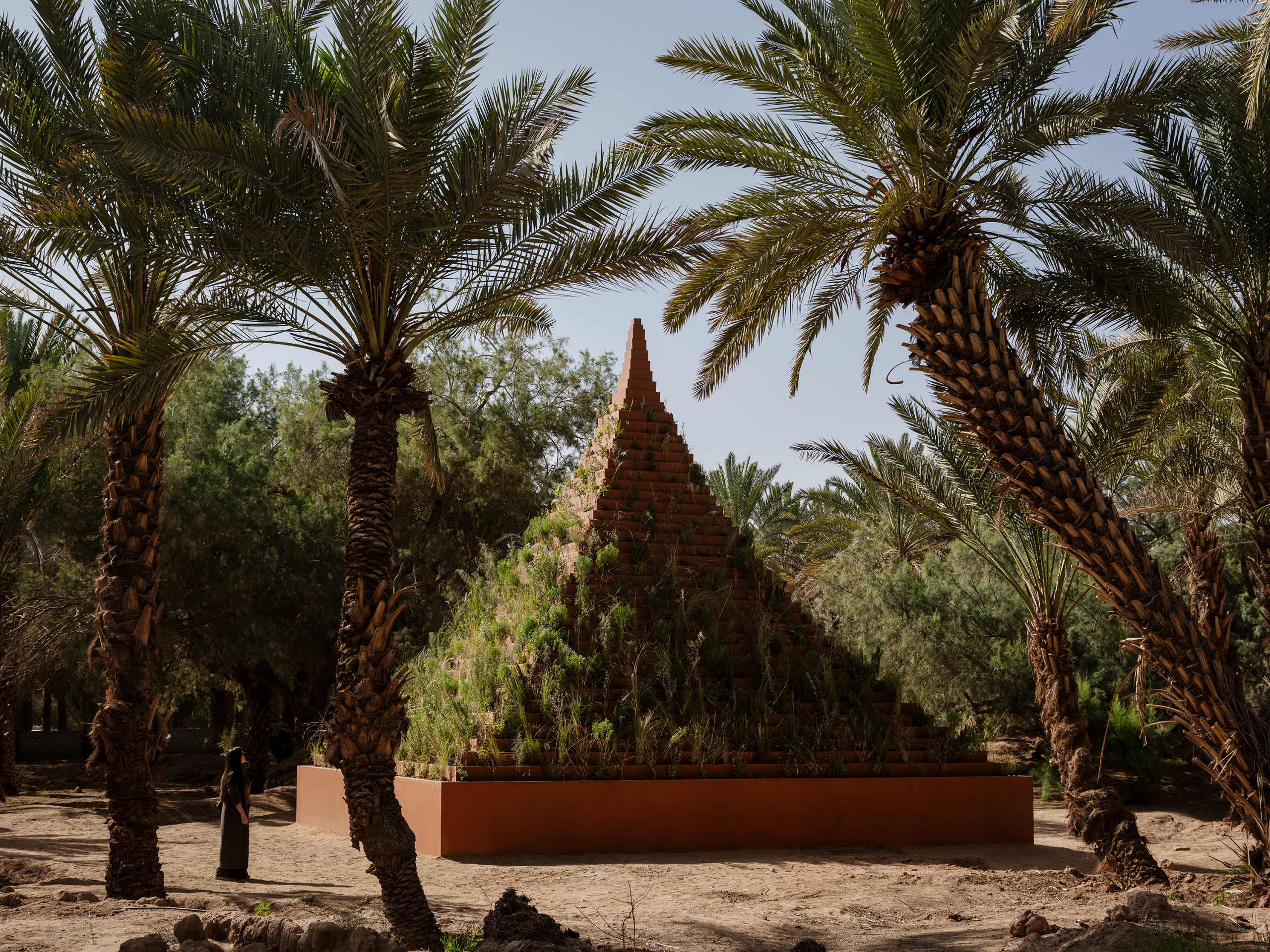
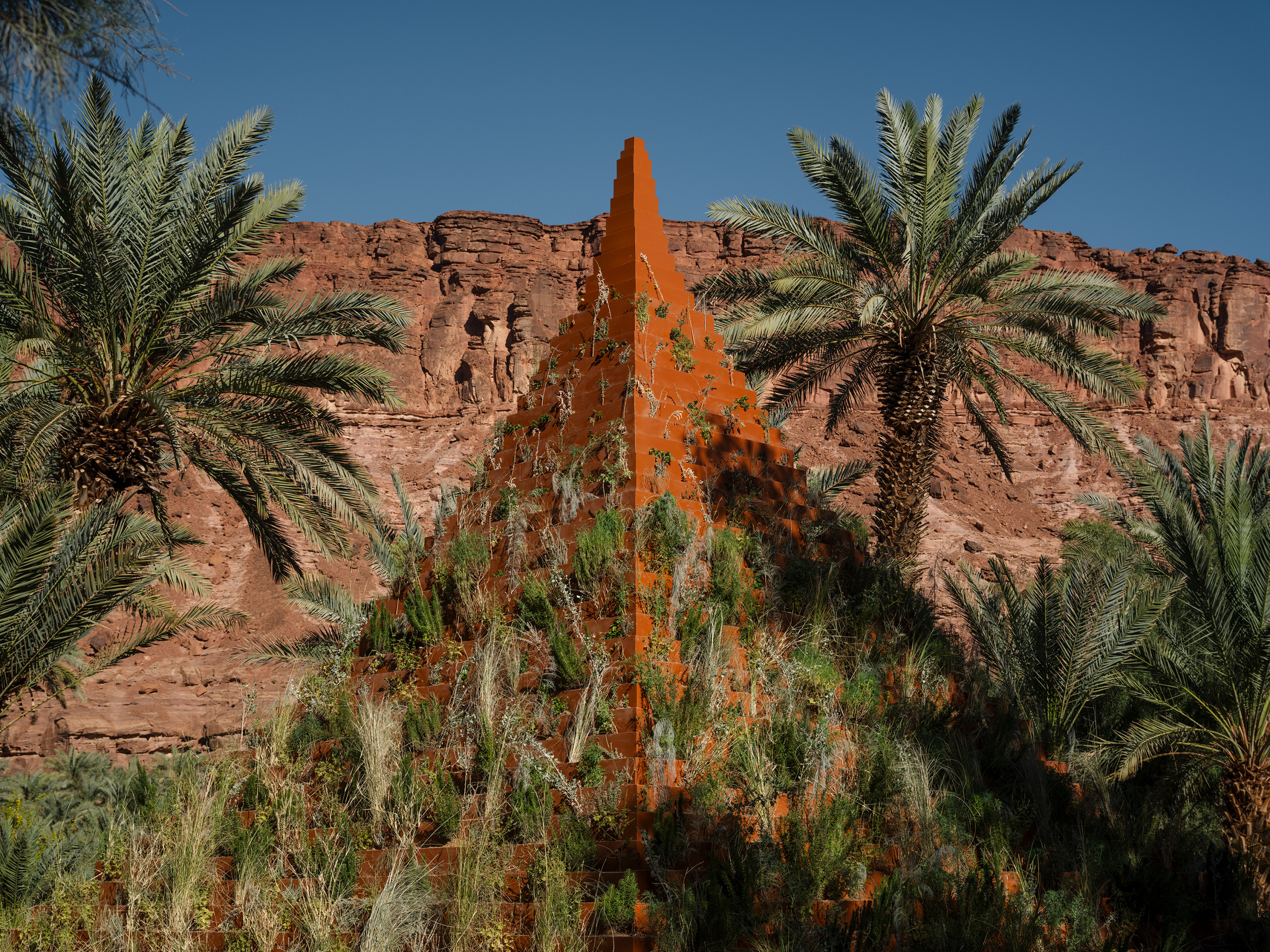
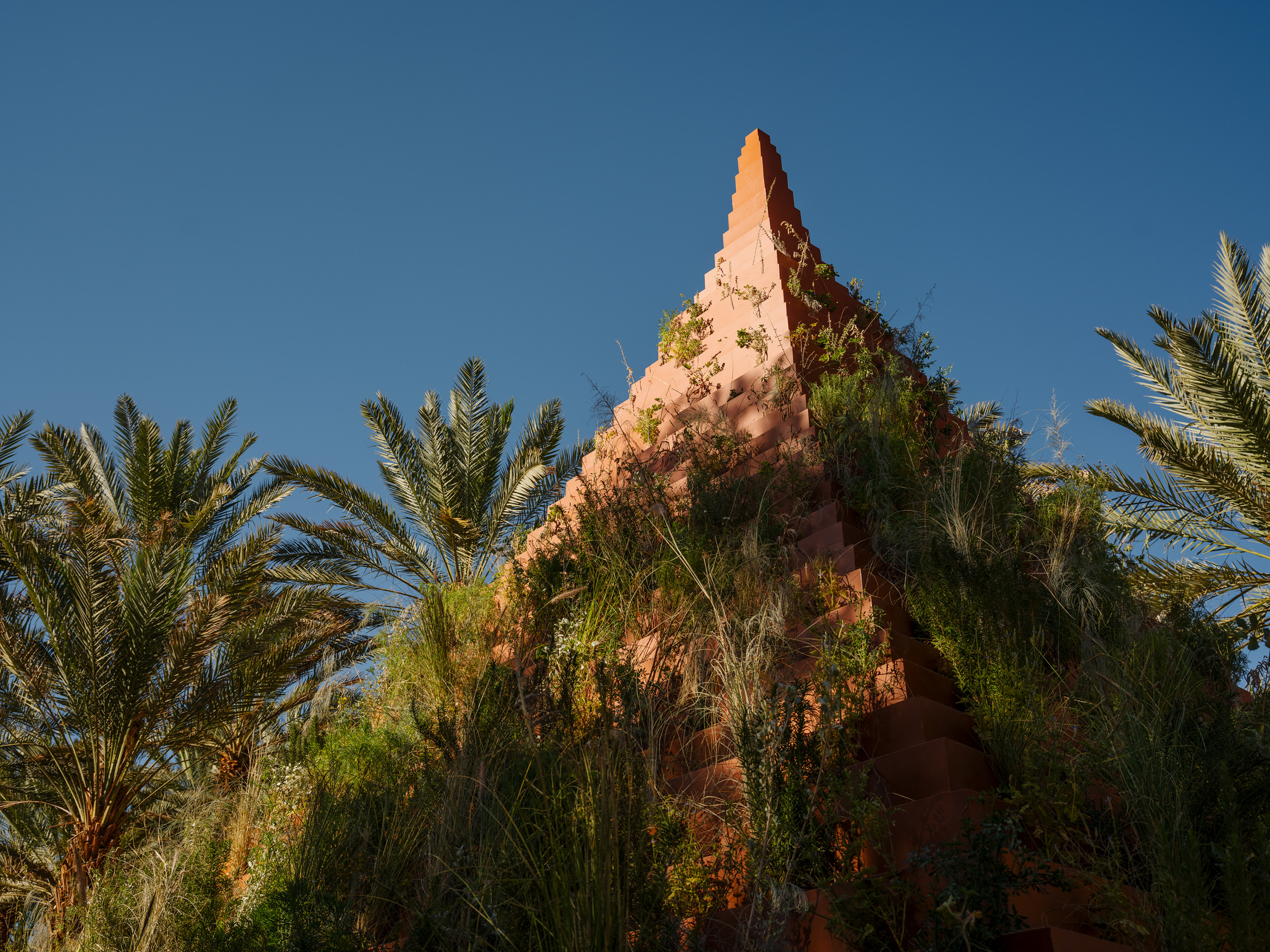
Each Living Pyramid is different. The environment is different, the people are different. I’m very interested in the different societies that come together on something so simple. I create my work to be able to stand up to any circumstance, in any circumstance. In environmental situations, regardless of the interference it may encounter when exhibited. Like children, they have to respond. They have to be able to fend for themselves and boldly express their meaning, amplifying their relevance.
My pyramids live in our era. They are conceived for today’s society as philosophy, timeless and universal. We as people have needs and aspirations, fulfillments and disappointments. There will always be the oppressors and the insulated ones, people whose privileges give them higher altitude, and those who swim in the mire of adversity. My pyramids are an ointment to ease the wound. An optimistic edifice. My work gives my visual philosophy form, beauty and power. Because to convey brutal facts, you need all these. The cycles of life renew from soil to seed, to plant, to blossom. The science of its structure - its eloquence, its meaning - speaks many languages, and to all humanity.
My flowers that burst forth from this pyramid will present the renewal and hope that must arise from all that is buried. It is a truth that doesn’t deny reality but faces up to it. It sees reality but doesn’t let it stop the dream. This is the paradox that gives this all its strength and endurance. The Living Pyramid is one manifestation of my visual philosophy: people don’t know how it relates to the Egyptian pyramids. And when they find out it has nothing to do with those? They become excited and begin to think. And when people begin to think, they become part of your work.
The desert affects the longevity of vegetation more than it affects the pyramid’s structure. The desert is not what it is. It’s what it does. I want my art to reach out and it doesn’t matter how it reaches, as long as it connects. Connection is what’s important; connection is what the world needs.
I keep comparing us to a lost beehive or an anthill. And I wrote a little poem:
This.
And this is. Bee cries out.
Abandon the hive. Abandon the hive.
We are falling and the poem is followed by a sound of the beehive tumbling out of the tree. Falling. Bees everywhere. Bees dying. Some of us will overcome the disaster. And build a new beehive.
I am not important. The work is important. The work is important. And what it does to help people. Hope: My message is solid. Hope you can’t see through. You have to live it. You have to suffer it. Live it. Love it. You have to work through it.
About the Artist
Born 1931, Budapest, Hungary, Agnes Denes is recognized as a pioneer of ecological and land art, as well as other art forms. Renowned for planting a field of wheat adjacent to Manhattan’s financial district, Denes often works on a monumental scale - such as planting entire forests in symbolic geometric patterns. Her vanguard work deals with environmental, cultural and social issues, immersed in science, philosophy, history and psychology, addressing the challenges of global survival. Also known for her innovative use of metallic inks and other nontraditional materials, she has created a prodigious body of exquisitely rendered drawings and prints that delineate her explorations in mathematics, philosophy, geography, science and other disciplines.
She has completed public and private commissions in North and South America, Europe, Australia and the Middle East, and has received numerous honors and awards including four fellowships from the National Endowment for the Arts; M.I.T’s highly prestigious Eugene McDermott Achievement Award “In Recognition of Major Contribution to the Arts” (1990); the Rome Prize from the American Academy in Rome (1998); the Anonymous Was a Woman Award (2007), among numerous others.
Denes was raised in Sweden and educated in the United States. Her exhibition career began in the 1960s, and she has participated in more than 450 exhibitions at galleries and museums throughout the world including a major retrospective at The Shed in New York in 2020. Her iconic work Wheatfield – A Confrontation (1982) was restaged in Basel, Switzerland: Honouring Wheatfield – A Confrontation (2024).